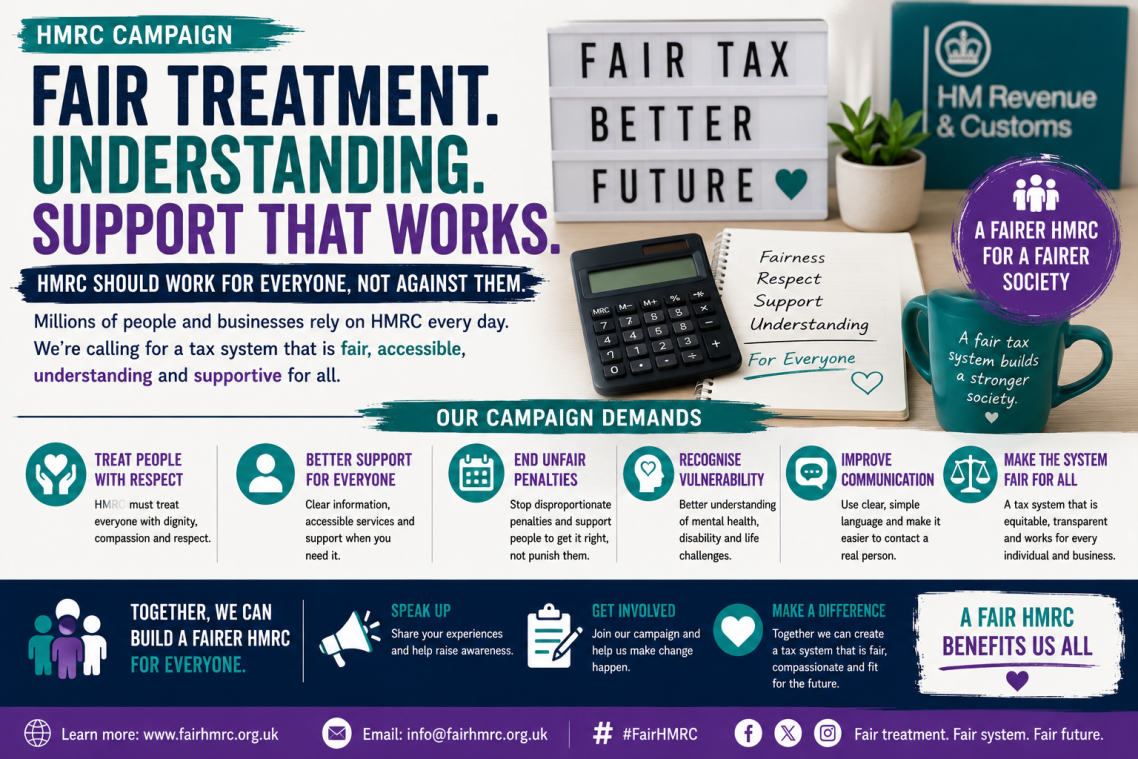
HMRC Campaign's
The Equality Act was supposed to guarantee equal treatment under public institutions.
So why does it increasingly feel like Britain operates on a two-tier system?
Millions of ordinary taxpayers spend hours trying to contact HMRC over:
• incorrect tax codes
• penalties
• self-assessment problems
• PAYE disputes
• child benefit issues
• late refunds
Meanwhile, HMRC operates a specialist division known as “Public Department 1” (PD1), historically associated with:
• members of the Royal Family
• MPs
• judges
• senior officials
• protected categories of taxpayer
Official government guidance confirms that transgender taxpayers with legally restricted records can also be transferred into PD1 with access handled by specialist staff.
The government says this is required under confidentiality obligations linked to the Gender Recognition Act 2004.
But this is where serious questions about equality and fairness begin.
The Equality Act 2010 was meant to ensure public bodies treat citizens equally and fairly — regardless of background, status, identity or political sensitivity.
Yet ordinary working people now see:
• specialist phone access for some groups
• collapsing service standards for everyone else
• endless waiting times
• reduced accountability
• public services prioritising “protected systems” over universal service quality
Equal rights must also mean equal standards.
Nobody is arguing against privacy protections.
EVERY taxpayer deserves confidentiality.
But there is a difference between protecting confidential records and creating systems that appear to give faster or more responsive access to selected categories while millions of ordinary citizens struggle to receive basic support.
This is why public trust is collapsing.
Because people increasingly believe there is:
• one standard for politically sensitive groups
• another for ordinary taxpayers
The Equality Act should protect fairness for ALL citizens — not create the perception that some groups receive enhanced institutional treatment while pensioners, small business owners, self-employed workers and families are left trapped in failing systems.
If HMRC can answer specialist lines efficiently, then HMRC can improve service standards for everyone.
Equality before public institutions should mean:
• equal access
• equal service
• equal responsiveness
• equal respect
Not:
priority systems for some while everyone else waits.
Britain cannot continue down a path where public confidence disappears because fairness itself appears selective.
Official sources:
https://www.gov.uk/tell-hmrc-change-of-details/gender-change
Equality Act 2010:
https://www.legislation.gov.uk/ukpga/2010/15/contents
HMRC confidentiality guidance:
https://www.gov.uk/hmrc-internal-manuals/information-disclosure-guide/idg30250
Gender Recognition Act guidance:
https://www.gov.uk/hmrc-internal-manuals/paye-manual/paye103005
Tax Advice – "Don't Get Caught Out"
Official Campaign
What it does
This is HMRC's flagship awareness campaign designed to help workers, contractors, agency staff, freelancers, and self-employed people avoid:
- Tax avoidance schemes
- Misleading tax advisers
- Umbrella company scams
- Invalid expense claims
- Unexpected tax bills
HMRC provides:
- Payslip checking tools
- Contract checking guidance
- Real-life case studies
- Tax avoidance warning signs
- Scam reporting guidance. 0search4turn0search0
Extra resources
Work Expenses Campaign
Official guidance
Claiming Expenses – Don't Get Caught Out
Purpose
HMRC has increasingly focused on tax refund companies advertising on social media and charging commissions for claims taxpayers could make themselves.
What it covers
- Working from home expenses
- Uniform and work clothing
- Mileage and vehicles
- Professional subscriptions
- Travel expenses
- Equipment purchases
HMRC warns that taxpayers remain responsible for any incorrect claim, even if a third-party company submitted it. citeturn0search2
Tax Avoidance Campaign
Official information
Main targets
- Contractors
- Agency workers
- NHS staff
- IT consultants
- Construction workers
- Umbrella company users
Common schemes HMRC warns about
- Loan schemes
- Profit share arrangements
- Disguised remuneration
- Offshore structures
- Artificial umbrella company arrangements
Real-life campaign stories
HMRC publishes stories from affected workers to demonstrate the consequences of joining tax avoidance schemes. turn0search4
Making Tax Digital (MTD)
Main campaign
Related campaign
Get Ready for Making Tax Digital for Income Tax
Objective
Modernise tax administration.
Who is affected
- Sole traders
- Self-employed workers
- Landlords
- Tax agents
Requirements
- Digital record keeping
- Quarterly updates
- Final annual declaration
- Compatible software
HMRC launched a major communications campaign before the April 2026 rollout. For qualifying sole traders and landlords with annual business/property income above £50,000, digital reporting became mandatory from April 2026.
Purpose
Allows landlords to voluntarily disclose previously undeclared rental income.
Who can use it
- Buy-to-let landlords
- Overseas landlords
- Holiday-let owners
- Multiple-property landlords
- Rent-a-room landlords above thresholds
Benefits
- Reduced penalties
- Structured disclosure process
- Opportunity to regularise tax affairs
The campaign remains one of HMRC's most significant voluntary disclosure programmes and was updated in 2026.
Objective
Encourage savings among lower-income households.
How it works
- Eligible savers can deposit money monthly.
- Government bonuses are paid on savings growth.
- Designed for people receiving qualifying benefits such as Universal Credit.
Audience
- Low-income workers
- Families
- Benefit recipients
Child Benefit Awareness Campaign
Official service
Campaign objectives
- Encourage eligible families to claim
- Raise awareness of National Insurance credits
- Explain High Income Child Benefit Charge rules
- Ensure new parents understand entitlements
Target groups
- New parents
- Adoptive parents
- Guardians
- Foster carers in some circumstances
Tax Credits Support Campaigns
Official information
Focus areas
- Renewals
- Changes of circumstances
- Overpayment prevention
- Universal Credit migration
Audience
- Working families
- Parents
- Existing tax credit recipients
National Minimum Wage Enforcement Campaign
Official guidance
National Minimum Wage Information
HMRC's role
HMRC enforces:
- National Minimum Wage
- National Living Wage
Campaign messages
- Know your rights
- Check your pay
- Report underpayment
Targets
- Employers
- Workers
- Agency staff
- Apprentices
Tax Fraud & Tax Evasion Campaigns
Reporting service
Areas targeted
- Hidden income
- Cash-in-hand businesses
- VAT fraud
- Employer fraud
- Offshore tax evasion
Campaign objective
Encourage confidential reporting and voluntary compliance.
HMRC Scam Awareness Campaign
Official guidance
Avoid and Report HMRC Scams
Focus
- Fake text messages
- Refund scams
- Phishing emails
- Fraudulent phone calls
- Social media scams
Main message
HMRC wants taxpayers to verify communications before sharing personal information.
Online Seller Compliance Campaign
Who it targets
- eBay sellers
- Etsy sellers
- Amazon Marketplace sellers
- Vinted sellers
- Depop sellers
Purpose
Help people understand when casual selling becomes taxable trading.
Recent HMRC compliance activity has generated significant awareness among online sellers and side-hustle operators. reddit17
Employer Compliance Campaigns
Official payroll guidance
Focus
- PAYE compliance
- National Insurance
- IR35
- Employment status
- Benefits in kind
Audience
- Employers
- Payroll providers
- Accountants
- HR teams
One-to-Many Compliance Campaigns
What they are
HMRC sends targeted letters, emails, and educational messages to groups believed to be at risk of under-reporting tax.
Common topics
- Crypto assets
- Overseas income
- Rental income
- Capital gains
- Online trading
- Self-employment
Goal
Encourage voluntary correction before formal investigations.
HMRC Main Campaign Portal
Government department
Major campaign websites
- Don't Get Caught Out
- Making Tax Digital
- Let Property Campaign
- Help to Save
- Child Benefit
- Report Tax Fraud
- HMRC Scam Reporting