Awareness

Campainors for changes coming together
(CMS) Child Maintenance Service
FAMILY COURTS
CMS demonstrates patterns
consistent with institutional
gaslighting and maladministration”
“There appears to be a coercive and defensive organisational culture”
“The service reflects a high-control environment where accountability is limited”
“Individuals experience interactions that feel invalidating, dismissive, and procedurally oppressive”
“There are signs of systemic maladministration combined with a psychologically unsafe workplace culture”
STOPSuicides UK (STOPS)
https://stops.org.uk/
STOPS work to raise awareness about how the UK Department for Work and Pensions (DWP), especially the Child Maintenance Service (CMS), can cause serious stress, mental health problems, and in some cases suicide for parents involved in the system.
They research real-life cases, investigate system failures such as wrong payments, unfair enforcement, and IT errors, and campaign for change. Their goal is to reduce stress, prevent suicide, improve government accountability, and support families affected by these issues.
In simple terms, they are trying to make the child maintenance system safer and fairer so that no one is pushed into severe distress or suicide because of it.
Jonboy’s fight - Continued
https://www.facebook.com/share/17FpzoZPC7/
Justice 4 Gavin Briggs campaign
The case of Gavin Briggs has become one of the most widely discussed examples used by campaigners questioning the practices of the UK Child Maintenance Service (CMS).
Gavin Briggs, a former RAF serviceman, died in 2020. Following his death, his father Ian Briggs began publicly campaigning for greater scrutiny, transparency and accountability within the child maintenance system. The campaign argues that financial pressure, disputed arrears, enforcement practices, and prolonged disputes with the CMS contributed to serious mental health impacts on Gavin and other parents facing similar situations.
The Justice 4 Gavin Briggs campaign has since collected testimonies, case studies, parliamentary submissions, and social media evidence from both paying and receiving parents who say they have experienced:
- disputed arrears,
- incorrect calculations,
- long-running appeals,
- aggressive enforcement action,
- forced placement onto Collect and Pay,
- and severe emotional and financial distress.
Campaigners involved with the project claim the problems extend beyond isolated mistakes and point to what they believe are wider systemic failings inside the CMS and former CSA systems. Some allegations include:
- inaccurate historical debt calculations,
- delays correcting errors,
- failures to properly assess changing income,
- and insufficient safeguarding for vulnerable parents experiencing mental health crises.
The campaign has also highlighted concerns raised in parliamentary discussions, National Audit Office reports, independent submissions, and online parent support communities. Critics of the CMS argue that both paying parents and receiving parents can become trapped in a system many describe as slow, adversarial and emotionally damaging.
At the same time, it is important to recognise that these claims remain heavily disputed. Government bodies maintain that the CMS exists to ensure children receive financial support and that enforcement powers are necessary in cases of non-payment. Many receiving parents also argue enforcement is still too weak and that unpaid maintenance leaves children in poverty.
The wider public debate surrounding the CMS now reflects deep distrust from all sides:
- paying parents who feel unfairly targeted,
- receiving parents who feel unsupported,
- and children caught in the middle of long-term conflict.
The Gavin Briggs campaign continues to call for:
- greater transparency,
- independent investigation,
- mental health safeguards,
- reform of enforcement practices,
- and a wider public inquiry into the operation of the Child Maintenance Service.
http://www.justice4gavinbriggs.com/
Noel Willcox: Campaines for reforms to (CMS) Child Maintenance Service
Noel talks about the Child Maintenance Service using its vast powers to force parents to pay money they don’t owe. Noel presents evidence that this government body inflates payments by 300%, and that terrified parents are choosing suicide when they can see no way out.
- Exposing the Child Maintenance Service – Noel Willcox Tells His Story
Interview on the “Anything Goes with James English” podcast. - The Child Maintenance Scandal | Noel Willcox x Peter Lloyd
Discussion about alleged issues and financial impacts within CMS. - Noel Willcox: Child Maintenance Service Is Causing Social Harm
Short interview clip about parents being treated unfairly. - 9pm LIVE – With Reform UK's Noel Wilcox
Live discussion touching on CMS debt and enforcement concerns. - https://www.facebook.com/story.php?story_fbid=10215231474215823&id=1702851783&rdid=l4ri4eqslkCYihwj#
Interview with Mike Graham
CMS I believe to be the biggest scandal to ever hit our shores.
UK CMS Fight for Change
UK CMS Fight for Change is a campaign group focused on reforming the UK Child Maintenance Service (CMS). They believe the current system is unfair to many paying parents and can cause serious financial pressure, mental health struggles, and family breakdown. They campaign for justice, transparency, and changes to how CMS handles cases.
They share personal stories, collect evidence of alleged CMS failures, and provide practical help such as complaint guides, Subject Access Request (SAR) guidance, letter templates, and advice on writing to MPs. Their goal is to push for government accountability, policy reform, and better protection for families affected by the system.
In simple terms, they are trying to make the Child Maintenance Service fairer, more accurate, and less damaging for parents and children involved in the system.
The “4 Billion Pound Lie” Campaign and the Debate Around CMS Arrears
The blog The 4 Billion Pound Lie has become part of a growing online movement questioning the accuracy, transparency and enforcement practices of the UK Child Maintenance Service (CMS) and the former Child Support Agency (CSA).
One article, “Who Speaks for Paying Parents? Missing Voices in the Child Maintenance Debate”, argues that public discussion around child maintenance often focuses on non-payment while giving less attention to paying parents who claim they have experienced administrative errors, disputed arrears, mental health pressures, and long-running financial disputes.
The campaign challenges official government arrears figures — often reported in the billions — and claims that parts of the historic CSA/CMS debt total may include:
- disputed calculations,
- duplicated balances,
- unenforceable historic debt,
- administrative errors,
- and cases where parents say payments were made but not properly recorded. (the-4billion-pound-lie.blogspot.com)
Campaigners and contributors to the blog argue that many paying parents feel excluded from mainstream discussion around child maintenance reform.
The wider debate reflects a growing divide in public opinion:
- paying parents who believe the system lacks accountability and fairness,
- receiving parents who believe enforcement still fails too often,
- and campaigners on both sides calling for major reform of the CMS.
The discussion surrounding the CMS increasingly highlights concerns about:
- transparency of arrears data,
- independent oversight,
- safeguarding vulnerable parents,
- accuracy of assessments,
- and the long-term impact of conflict on children and families.
16/5/2026
BBC news report
Scott reviews thing
narrates
https://www.bbc.co.uk/news/articles/cq8wjn98y85o
Summary: Exposed – The Truth About the Child Maintenance Service
The Child Maintenance Service (CMS) was created to ensure children receive proper financial support after parents separate. However, for many families, the reality is very different.
Recent investigations, including BBC reports and public testimony, have exposed serious failures within the system. Parents across the UK have reported incorrect assessments, huge arrears created by administrative errors, poor enforcement against non-paying parents, and cases where people were forced to pay debts they did not actually owe.
One BBC report highlighted parents saying they were chased for thousands of pounds in incorrect arrears due to CMS mistakes, causing severe financial hardship, mental stress, and long-term damage to family stability. Some parents reported years of fighting to correct obvious errors, while enforcement action continued against them regardless. Public concern around CMS errors has also been reflected in wider national discussion and parliamentary debate about reform of the system.
Many parents also describe a lack of accountability. Complaints are often delayed, evidence is ignored, and families are pushed through a long and exhausting complaints process involving internal reviews, the Independent Case Examiner, and sometimes even Ombudsman involvement before any correction is made.
Critics argue that the system often protects bureaucracy rather than children. Instead of helping families, some say CMS can worsen conflict, create financial abuse opportunities, and leave both paying and receiving parents trapped in endless disputes.
The biggest concerns raised include:
- incorrect maintenance calculations
- failure to properly assess real income
- non-enforcement against parents avoiding payment
- false arrears and wrongful debt recovery
- poor complaint handling
- delayed corrections of obvious mistakes
- lack of accountability for serious administrative failures
For many families, the issue is not child maintenance itself—it is a system that too often gets it wrong and makes it extremely difficult to fix.
Children deserve proper support. Parents deserve fairness. And the public deserves a Child Maintenance Service that works properly, transparently, and lawfully.
Until major reform happens, many families remain stuck fighting the very system that was supposed to protect them.
Parliamentary Petitions Campaigns
Current notable petitions
Review CMS to be calculated on both parents’ income, including investments
https://petition.parliament.uk/petitions/760556
Reform CMS and strengthen protections for paying parents
Focuses on fairness, appeals, and administrative processes.
https://petition.parliament.uk/petitions/755824
Include Child Maintenance as income in Universal Credit assessments
Seeks welfare policy changes relating to maintenance payments.
https://petition.parliament.uk/petitions/752486
Cap income used in maintenance calculations
Advocates changes to how high-income cases are assessed.
https://petition.parliament.uk/petitions/766849
Families Call for Change Ian Brigs and Jo sister of Jonboy, After Loved Ones Die by Suicide Amid Child Maintenance Debt Pressures
The Child Maintenance Service (CMS) – Fraud, Corruption & System Failure
Is the Child Maintenance Service Really Helping Children?
CMS Files - Exposing the Child Maintenance Service (Fake debt, Fake Court orders, & Real harm)
Designed to be Broken
The Child Maintenance Service (CMS) – Fraud, Corruption & System Failure
Is the Child Maintenance Service Really Helping Children?
This raises serious concerns about how the UK Child Maintenance Service (CMS) operates.
Many parents believe CMS is no longer working as a child support service. Instead, they argue it has become a system focused on collecting money through pressure, penalties, and enforcement—often without fairness, transparency, or proper evidence.
For thousands of paying parents, especially fathers, CMS is described as a system that causes financial hardship, emotional stress, and family breakdown rather than helping children.
1. CMS Is Accused of Acting Like a Money Collection System
The main concern is that CMS behaves more like a debt collection agency than a child support service.
Parents report that:
- Maintenance payments are often calculated incorrectly
- Income figures are wrong or outdated
- Cases are handled unfairly
- Disputes are ignored or delayed
- Enforcement starts before investigations are completed
Many feel they are treated as guilty first and only allowed to defend themselves later.
2. False Arrears and “Phantom Debt”
One of the biggest complaints is the sudden appearance of large debts that parents say they do not owe.
These arrears may happen when:
- Payments were already made
- Private agreements were already in place
- CMS records were incorrect
- Administrative mistakes were made internally
Despite this, parents can still face serious enforcement action before the issue is properly reviewed.
Many describe this as being charged for debt that never existed.
3. Harsh Enforcement Tactics
CMS has strong legal powers to recover money, and many believe these powers are used too quickly and too aggressively.
This can include:
- Money taken directly from wages
- Money removed from bank accounts
- Bailiff action
- Driving licence suspension
- Passport restrictions
- Property liability orders
- Threats of prison in extreme cases
For many families, this creates financial crisis and long-term damage.
4. Private Companies Profit From Enforcement
Another major concern is that private debt collection and enforcement companies can profit from CMS cases.
Critics argue this creates a system where:
- More enforcement means more profit
- Cases are escalated instead of resolved
- Families become financial targets
This raises serious questions about fairness and conflicts of interest.
5. Very Little Accountability
Many parents say it is almost impossible to challenge CMS decisions.
Common complaints include:
- Internal complaints rarely succeed
- Appeals take months or years
- Tribunal processes are stressful and expensive
- Government departments protect each other
- MPs often struggle to help
This leaves many families feeling trapped inside a system they cannot fight.
6. The Emotional Damage to Families
The financial pressure is only part of the problem.
Parents describe serious emotional consequences, including:
- Depression
- Anxiety
- Stress-related illness
- Family breakdown
- Loss of contact with children
- Parental alienation
- Mental health crises
- Suicidal thoughts in some cases
Many believe CMS is damaging families rather than protecting them.
What Needs to Change?
The call for reform is growing.
Many campaigners want:
- Full transparency in payment calculations
- Independent investigations of disputes
- Fair appeals before enforcement begins
- Accountability for false arrears
- Review of private enforcement contracts
- Equal protection for both parents
- A system focused on children, not debt collection
Some believe CMS needs major reform. Others believe it should be completely abolished and replaced.
The biggest question remains:
Is CMS protecting children—or protecting the system itself?
For many parents, CMS feels less like support and more like punishment.
If these concerns are true, this is not just a personal issue for separated families—it is a national issue of justice, accountability, and human rights.
A child maintenance system should protect families, not destroy them.
Real reform is urgently needed.
This raises serious questions about whether the UK Child Maintenance Service is serving children—or serving itself. For thousands of parents, CMS is described not as support, but as financial punishment enforced through fear, bureaucracy, and legal pressure. If these allegations are true, reform is not optional—it is urgent.

(CMS) Opinions and Discussions For Reforms
RIGHT FIRST TIME ORGANISATION
We believe in fairness, equality, and proper support for children in all households.
Where parents are claiming benefits and Child Maintenance Service (CMS) payments are involved, the current system can create unfair financial pressures for shared-care families.
We believe:
• CMS payments should be recognised as part of total household income assessments.
• A fair percentage adjustment should be considered across Universal Credit, Child Benefit, and Housing support systems where appropriate.
• Where there is genuine shared care, financial support should reflect the child living in more than one household.
• Parents providing overnight care, food, clothing, heating, transport, and daily support should receive fair recognition within the benefits system.
• The current system can place unequal pressure on one household while ignoring the real cost of shared parenting arrangements.
• Better coordination is needed between CMS, DWP, Universal Credit, and housing systems to reduce poverty, conflict, debt, and financial hardship affecting children.
How This Affects the Public Every Day:
• Increased child poverty in shared-care households
• Financial stress on separated families
• Housing instability
• Mental health pressures
• Increased family conflict
• Greater reliance on food banks and crisis support
• Reduced ability for both parents to actively support children
We also believe the current Mandatory Reconsideration (MR) process is contributing to unnecessary stress for families and increasing costs to the public purse.
A Mandatory Reconsideration is often the result of a complaint, an administrative error, missing evidence, or a flawed decision. However, many claimants feel they are treated as though they are simply disagreeing without reason, or attempting to challenge the system unfairly.
In many cases, people are forced to proceed to tribunal simply to have evidence properly reviewed or obvious mistakes corrected.
This creates avoidable pressure on:
• HM Courts and Tribunals Service
• DWP staff resources
• public funding
• advice services
• mental health services
• families already under financial stress
Large numbers of tribunal decisions overturn original DWP decisions each year, particularly in disability-related cases such as PIP and ESA assessments. This raises serious concerns about decision-making quality and whether issues could be resolved correctly at the earliest stage — “Right First Time”.
We believe:
• complaints and errors should be recognised properly at Mandatory Reconsideration stage
• evidence should be fully reviewed before cases reach tribunal
• claimants should not feel criminalised for challenging incorrect decisions
• reducing avoidable tribunals would save significant public money each year
• early fair decision-making would improve trust, reduce hardship, and protect children and families from unnecessary stress
A fair and efficient system should focus on resolving mistakes early, not pushing vulnerable families into lengthy legal processes to obtain support they may already be entitled to.
We support reforms that place children first, recognise modern family arrangements, and create a balanced system that works fairly for all households involved in raising children.
Main Issues Highlighting
1. Shared Care Costs Money in Both Homes
Children often:
- sleep in both homes
- need clothes in both homes
- eat in both homes
- use heating/electricity in both homes
But the system often treats one household as the “main” household financially.
2. Child Maintenance vs Benefits Interaction
Some people argue:
- CMS payments are not always reflected fairly
- one household may receive:
- CMS
- UC child element
- housing support
- Child Benefit
while the other household still pays:
with out additional benefits support,
- bedrooms
- transport
- food
- activities
during shared care.
3. Public Impact
- poverty
- debt
- homelessness risk
- mental health
- pressure on public services
Having costly affects to....
- NHS pressure
- housing demand
- social services
- welfare spending
Important Legal Note
At present in UK law:
- CMS is NOT normally treated as taxable income
- Child Maintenance usually does NOT reduce Universal Credit directly
- Child Benefit normally goes to one main claimant household only
Shared care reductions in CMS are currently based mainly on:
- overnight stays
Official guidance:
CMS Shared Care Rules
Useful Organisations and Research
Citizens Advice
Child Poverty Action Group
CPAG Child Maintenance Information
UK Parliament CMS Research
Cost of Raising a Child
Raising 1 Child in the UK (LOW-INCOME WORKING FAMILY)
(Child Benefit + Universal Credit child element)
Headlines vs reality
Reported cost: around £229,000 (MEDIA FIGURES)
Realistic cost (no childcare, basic living): 0-18 years
£90,000 – £110,000
After government support (Child Benefit + Universal Credit child element)
Support received: ~£75k–£80k
Actual out-of-pocket cost:
£20,000 – £40,000 over 18 years 0-18 (Estimated Around 15k each parent 0-18)
WHAT FAMILIES ACTUALLY PAY FOR
This is the real spending, not inflated research assumptions:
Main costs (majority of spending)
Food → biggest cost over time
Clothing & shoes
School costs (uniform, trips, lunches)
Transport (especially teens)
Teen extras (phone, social life)
Smaller costs
Slight increase in bills
Basic toys / replacements
Occasional furniture/items
NOT major costs (in real life for low-income families)
Childcare (if using family support) or benefit supported amounts
Big housing upgrades
Holidays / expensive activities
REAL COST IN SIMPLE TERMS
Over 18 years: 0 -18
£20k–£40k total
Monthly:
£90 – £180
Weekly:
£20 – £40
BOTTOM LINE
Most low-income working families are mainly paying for:
Food + clothes + school + teen costs
Not the £229k headlines — that’s inflated by:
childcare
housing assumptions
lifestyle expectations
Reality:
Raising a child (without childcare) is manageable but steady, not extreme — and much of the basic cost is offset by support.
LEGAL NOTICE AND DISCLAIMER
Right First Time UK Organisation is an independent public-interest and awareness initiative.
The information, opinions, and statements published by this organisation are intended for public discussion, policy debate, research, campaigning, and educational purposes only.
Nothing published by Right First Time Organisation should be considered legal advice, financial advice, regulated welfare advice, or professional representation.
The organisation recognises that:
• Child Maintenance Service (CMS)
• Department for Work and Pensions (DWP)
• HM Courts and Tribunals Service
• Universal Credit
• Child Benefit
• Housing Benefit
operate under current UK legislation and statutory regulations.
Any views expressed regarding Mandatory Reconsiderations, tribunals, shared care, benefit assessments, public spending, or administrative processes are matters of public opinion, policy concern, and lawful public-interest commentary.
Right First Time Organisation does not accuse any individual, staff member, department, or authority of criminal wrongdoing unless determined by a court of law.
References to:
• unfairness
• system failures
• administrative errors
• complaints
• financial hardship
• stress caused by processes
are based on publicly reported experiences, tribunal outcomes, government statistics, public documents, and individual case concerns.
Users are encouraged to seek independent legal or welfare advice from qualified organisations where necessary, including:
• Citizens Advice
• legal professionals
• accredited welfare rights advisers
This organisation supports lawful, respectful, evidence-based discussion and encourages constructive reform aimed at improving outcomes for children, families, and the wider public.
All content remains subject to UK law including:
• Defamation Act 2013
• Data Protection Act 2018
• Human Rights Act 1998
• Equality Act 2010
• Freedom of Information Act 2000
By accessing or sharing this material, users acknowledge that the content represents public-interest opinion and campaigning material rather than official government guidance or legal determination.
Raising 1 Child in the UK (LOW-INCOME WORKING FAMILY)
(Child Benefit Only)
Parent works
Income or savings is too high for Universal Credit
- Universal Credit reduces gradually as earnings go up.
- After any work allowance, UC is reduced by 55p for every £1 earned.
Savings limits
These are strict:
- Over £6,000 savings → UC starts reducing
- £16,000+ savings → usually no Universal Credit entitlement
https://www.gov.uk/benefits-calculators?utm_source=chatgpt.com
Still receives Child Benefit only
- Between £60,000 and £80,000, you repay 1% of the benefit for every £200 earned above £60k.
- At £70,000, roughly half is repaid.
- At £80,000+, all of it is repaid.
No paid childcare
Basic lifestyle (not luxury spending)
https://www.gov.uk/child-benefit-tax-charge?utm_source=chatgpt.com
HEADLINES vs REALITY
Media headlines:
“Child costs around £220k+ to raise A CHILD”
Real-world low-income/basic living reality:
0–18 years total:
£95,000 – £115,000
That’s the actual spending for:
- food
- clothes
- school
- transport
- teen costs
- household basics
NOT luxury lifestyles.
WHAT SUPPORT IS RECEIVED?
IF Child Benefit ONLY
Current UK Child Benefit is approximately:
- First child:
~£26/week
Over 18 years:
£24,000 total support
(assuming rates rise slowly over time)
ACTUAL OUT-OF-POCKET COST
Total realistic spending:
£95k–£115k
Minus Child Benefit:
£24k support
REAL FAMILY COST:
£70,000 – £90,000 over 18 years
WHAT THIS REALLY MEANS
Monthly average:
£325 – £420 per month
Weekly:
£75 – £95 per week
That’s the real ongoing cost many working families feel.
WHAT THE MONEY ACTUALLY GOES ON
Biggest real costs
Food
Largest long-term expense
Clothes & shoes
Especially during growth spurts + teenage years
School costs
- uniforms
- trips
- lunches
- supplies
Transport
Bus/train costs rise a lot during teen years
Teen costs
Phones, internet, social life, activities
Smaller background costs
- electricity/gas increase
- toiletries
- replacing furniture/items
- toys/birthday gifts
- occasional household upgrades
WHAT OFTEN ISN’T A MAJOR COST
(For many low-income working families)
Childcare
If family/grandparents help
Bigger housing
Many families stay in same property
Expensive holidays
Usually limited or occasional
Private clubs/activities
Often avoided due to cost
WHY THE MEDIA AROUND £220k FIGURES LOOKS SO HIGH
Those studies usually include:
- full-time nursery childcare
- larger homes/mortgages
- middle-class lifestyle spending
- holidays
- extracurricular activities
- cars upgraded for family size
- higher “expected” living standards
That inflates the number massively.
REALISTIC BOTTOM LINE
If a working parent:
- earns too much for Universal Credit
- still gets Child Benefit
- avoids childcare costs
- lives modestly
Then the real cost of raising 1 child is closer to:
£70k–£90k total over 18 years
Which feels more like:
£75–£95 per week
—not £220k headlines.
SUMMARY
For many ordinary working UK families, raising a child is usually a steady long-term expense — mainly food, clothes, school and teen costs — rather than an extreme £200k+ burden.
DISCLAIMER ABOUT THESE FIGURES
These figures are estimated examples, not exact guaranteed costs for every family.
They are based on:
- UK government benefit rates
- public research on child-raising costs
- simplified budgeting assumptions
- typical low-income family spending patterns
Actual costs vary depending on:
- income
- rent/housing situation
- childcare use
- number of children
- region of the UK
- lifestyle choices
- inflation and future policy changes
Sources Used
Research on child-raising costs
- Child Poverty Action Group (CPAG)
Widely quoted UK estimates for the cost of raising a child.
UK government benefit rates
Important Context
The lower estimates shown here:
- remove or reduce childcare costs
- assume modest/basic living
- assume some government support is received
- are intended to reflect realistic cash spending for many lower-income households
Official research figures are usually much higher because they often include:
- childcare
- larger housing needs
- social participation costs
- broader “minimum acceptable living standard” assumptions
These examples are:
simplified financial illustrations,
not official financial advice or exact predictions.
Real family experiences and costs can differ significantly.
Right First time UK Opinion on Child Maintenance Reform
A fair child maintenance system should focus on:
- the child’s wellbeing
- affordability for both parents
- reducing conflict after separation
- and creating stable support for children.
The current system can sometimes feel unfair or unrealistic when:
- a parent is on benefits,
- has very high essential outgoings,
- debts,
- disability costs,
- housing pressures,
- or shared care responsibilities.
Suggested Simpler Approach
before any organisation or government service involvement.
mediation first: help resolve conflict and come to agreement:
ware agreement cant be met on amounts
Set affordable amounts to contribute to the other parent with whom has majority of care :
ware agreement between parents, mediation agreements or court orders.
Set affordable repayment amounts based on:
- actual income
- essential outgoings
- housing costs
- debts and financial hardship
- benefits received
- shared care arrangements
rather than relying mainly on fixed percentage calculations alone.
Why this could help
Fairer for low-income parents
Parents on:
- Universal Credit
- disability benefits
- low wages
- unstable work
could pay an amount that is realistic and sustainable.
This may reduce:
- arrears building up
- enforcement action
- financial hardship
- parents disengaging from children.
Easier to enforce
A clear agreed affordable amount:
- is simpler to manage,
- easier to track,
- and reduces calculation disputes.
This could lower:
- CMS errors,
- reassessments,
- appeals,
- and administrative problems.
Helps children most
When payments are realistic:
- children are more likely to receive consistent support,
- conflict between separated parents can reduce,
- and children benefit emotionally and financially.
Child Equality Matters
Children should not experience major inequality simply because parents separate.
A balanced system should aim to:
- maintain stable support,
- encourage both parents to stay involved,
- and avoid pushing either household into severe hardship.
Shared Care Should Be Properly Recognised
Where shared care exists, costs are shared too:
- food
- clothes
- heating
- transport
- bedrooms
- activities
So reductions linked to overnight care can help reflect real shared parenting responsibilities.
Overall Opinion
A more flexible and income-aware child maintenance system could:
- improve fairness,
- reduce conflict,
- increase compliance,
- reduce enforcement costs,
- and better support children’s long-term wellbeing.
The goal should not simply be maximising payments,
but creating:
stable, affordable, consistent support that works for both households and ultimately benefits the child most.
Disclaimer:
This is a simplified opinion's and discussion's of possible approaches to child maintenance and family support in the UK.
It is:
- not legal advice,
- not official government policy,
- and not financial advice.
Child maintenance in the UK is currently governed by the Child Maintenance Service (CMS) and calculated under existing legislation and regulations.
The examples and views discussed are intended to explain:
- affordability,
- shared care,
- benefit interactions,
- and possible fairness considerations
in a simplified way.
Actual child maintenance outcomes depend on:
- income,
- benefits,
- shared care arrangements,
- housing costs,
- other children,
- disabilities,
- debts,
- and individual circumstances.
Government support and benefit rates may also change over time.
For official guidance, calculations, or legal advice, consult:
- GOV.UK Child Maintenance
- Citizens Advice
- a qualified legal or financial adviser.
The Child Maintenance System Is Failing Families
What the Data Says About Child Maintenance in Britain
Child Maintenance System Failures (CSA → CMS)
1993
Child Support Agency Created
Government launched the CSA to enforce child maintenance payments, but the system quickly became associated with administrative failures and inaccurate assessments.
2008
CSA Collapse
The CSA was officially replaced after years of IT breakdowns, unpaid arrears, backlogs, and criticism from Parliament and the NAO.
2012
Child Maintenance Service (CMS) Introduced
The CMS replaced the failing Child Support Agency (CSA), which had become associated with years of IT breakdowns, unpaid arrears, inaccurate assessments, enforcement failures, and severe administrative dysfunction. The new CMS system was introduced to modernise child maintenance through a redesigned digital platform and stronger enforcement powers. However, many of the structural problems from the CSA era continued into the CMS system, including delays, incorrect calculations, weak enforcement, communication failures, and large unpaid arrears affecting vulnerable families and children.
2012–2025
CMS Systemic Failures
Persistent arrears, weak enforcement, incorrect calculations, payment delays, IT issues, and poor accountability continued despite reforms. Parliamentary and NAO reports warned the system was still failing vulnerable families and children.
Child Support Agency (1993–2008)
The Child Support Agency was created to collect and enforce child maintenance payments but became associated with chronic dysfunction:
- Massive IT failures and inaccurate calculations.
- Long delays and unresolved cases.
- Billions in unpaid maintenance.
- Poor communication and accountability.
- Families left without financial support.
Official reports described the agency as “not fit for purpose,” leading to its replacement.
Child Maintenance Service (2012–2025) (ongoing)
The replacement system, CMS, continued to face major criticism:
- Large unpaid arrears remained outstanding.
- Weak enforcement against non-paying parents.
- Incorrect assessments and payment errors.
- Delays in resolving disputes.
- Ongoing IT and administrative problems.
- Vulnerable families pushed into poverty.
National Audit Office and Parliamentary reports repeatedly warned that many structural problems from the CSA period had never been fully resolved.
Common Patterns Across These Failures
- Weak accountability and lack of oversight.
- Political influence overriding public interest.
- Regulatory and enforcement failures.
- Large-scale IT and administrative breakdowns.
- Underfunding and institutional decline.
- Delayed responses to warnings and evidence.
- Loss of public trust in government and institutions.
The latest official CMS statistics
December 2025, CMS managed 800,000 arrangements for 720,000 paying parents, covering over a million children.
A House of Lords report found serious compliance problems: in March 2025, 220,000 paying parents were due to pay through Collect and Pay; 70,000 paid nothing, and many others paid less than due.
The National Audit Office found CMS arrears are concentrated among lower-income paying parents: 46% of paying parents did not earn enough to pay income tax in 2021–22, but they made up 62% of parents with arrears.
What’s happening to receiving parents
Campaign groups say receiving parents often face non-payment, delayed enforcement, hidden income, and repeated pressure to prove abuse or arrears. Gingerbread’s 2024 “Fix the CMS” report was based on 24 interviews, 1,622 survey responses and FOI responses.
Gingerbread’s evidence to Parliament said 77% of surveyed parents with care had experienced domestic abuse from the other parent, and only 68% had told CMS.
The Domestic Abuse Commissioner argued CMS should do more to verify income and not put the burden on receiving parents to prove hidden income.
What’s happening to paying / non-resident parents
The government’s 2025 consultation response says paying-parent respondents raised concerns about bias and support for paying parents who are abuse victims.
Current Collect and Pay charges are significant: paying parents pay an extra 20%, while receiving parents lose 4% from payments.
What’s happening to children
Child maintenance matters because it directly affects child poverty and household income. Gingerbread’s report links lower single-parent household income to worse child outcomes and cites evidence that income affects children’s health, cognitive and social-behavioural outcomes.
One Parent Families Scotland’s 2025 campaign report says child maintenance should be treated as children’s rights and parents’ responsibilities, especially where poverty and domestic abuse are involved.
Current reforms / campaigns
The government is moving toward reforming how payments are collected and transferred, including changes to Direct Pay and Collect and Pay fees.
https://www.gov.uk/government/consultations/child-maintenance-improving-the-collection-and-transfer-of-payments/outcome/government-response-child-maintenance-improving-the-collection-and-transfer-of-payments?utm_source=chatgpt.com
The House of Lords report says CMS has a poor reputation, long waiting times, poor case information, repeated trauma for abuse survivors, and reluctance to publicise its services or successes.
Paying Parents, Receiving Parents, and Children
The Reality of the Child Maintenance Service: Voices From Both Sides
What paying / non-resident parents are saying
A common complaint from paying parents is that CMS calculations can feel disconnected from actual shared care arrangements or real-life costs.
On Reddit’s r/childmaintenanceuk and LegalAdviceUK, fathers frequently discuss:
- being assessed incorrectly,
- delays updating care arrangements,
- maintenance still being charged when children are living with them,
- problems around self-employment,
- and feeling treated as “guilty until proven innocent.”
One Reddit thread describes a father claiming:
“My children are living with me, but I still have to pay.”
On UK father-support forums like Dad.info forums, there are complaints that CMS struggles to properly assess complex finances involving limited companies or shared assets.
There are also recurring accusations from paying parents that:
- overnight stays are ignored or undercounted,
- CMS updates are slow,
- ex-partners manipulate contact arrangements,
- and appeals take months.
Some fathers’ groups online argue CMS financially discourages shared parenting, though this is strongly disputed by single-parent campaign groups.
What receiving parents are saying
Receiving parents — mostly mothers in online discussions — often describe the opposite experience: that CMS is too weak to enforce payments.
Across Mumsnet, Netmums, TikTok, and Facebook groups, common complaints include:
- hidden income,
- self-employed parents paying very little officially,
- long delays in enforcement,
- arrears building for years,
- and CMS placing the burden of proof on the receiving parent.
A recurring online theme is frustration about “lifestyle vs declared income,” where posters describe ex-partners appearing wealthy while officially reporting very low earnings.
There is also anger over rules reducing maintenance when a paying parent has additional children in a new household.
TikTok and Facebook discussions frequently frame CMS payments as unrealistically low compared with actual child costs.
What adult children and broader social commentary say
Across YouTube comments, Reddit parenting subs, and newspaper comment sections, adult children of separated parents often describe:
- financial instability growing up,
- resentment toward absent parents,
- conflict over money affecting relationships,
- and feeling like “a number in the system.”
Broader online debate has become heavily polarised:
- some argue CMS unfairly targets fathers;
- others argue enforcement is far too weak and allows avoidance;
- many say both parents are trapped in a bureaucratic system that escalates conflict.
Parenting subreddit studies also show mothers and fathers discuss parenting differently online:
- mothers more often discuss practical care burdens,
- fathers more often discuss fairness, access, legal issues and recognition.
Evidence of systemic issues appearing across all sides
What stands out from social media is that many complaints overlap even when the perspectives differ.
Both sides commonly complain about:
- slow case handling,
- poor communication,
- outdated HMRC income data,
- difficulty correcting mistakes,
- long appeal timelines,
- and emotional stress.
That overlap appears repeatedly across:
- Reddit,
- Mumsnet,
- Netmums,
- Facebook groups,
- and parliamentary evidence.
Useful communities and discussion sources
- r/childmaintenanceuk (Reddit)
- Mumsnet CMS discussions
- Netmums child maintenance forum
- Dad.info separation and maintenance forum
- MoneySavingExpert child maintenance discussions
- Official CMS GOV.UK page
The overall picture from social media is not one-sided. The strongest consistent theme is distrust:
- receiving parents often feel CMS fails to enforce,
- paying parents often feel CMS ignores context and fairness,
- and many children end up caught in prolonged parental conflict and financial instability.
The Child Maintenance Service (CMS) – Fraud, Corruption & System Failure
Is the Child Maintenance Service Really Helping Children?
All major public news on Child Maintenance Service (CMS) — last 10 years (2016–2026)
Most coverage focuses on receiving parents, but a major part of public news has also been about paying parents (often called the non-resident parent / NRP) who say CMS calculations, enforcement, and investigations were unfair or wrong.
Common problems for Paying Parents
1. Wrong income calculations
Many paying parents reported CMS using:
- outdated HMRC income
- old tax-year earnings
- one-off bonuses counted permanently
- redundancy payments treated unfairly
- overtime/commission distortions
- business income misunderstood
This often caused disputes over “gross weekly income.”
Many argued:
“CMS uses historic income, not real current income”
especially after job loss or reduced hours.
This became a major Parliament issue.
2. Self-employed parents treated inconsistently
Two opposite complaints happened:
receiving parents said:
“self-employed parents hide income”
while
paying parents said:
“CMS doesn’t understand legitimate business structure”
especially involving:
- limited companies
- retained profits
- directors’ loans
- dividends
- business reinvestment
- seasonal income
This became one of the biggest CMS controversies.
3. Enforcement before disputes resolved
Many paying parents complained about:
- deductions from earnings orders
- deduction from bank accounts
- liability orders
- passport/driving licence threats
- court action
before appeals or mandatory reconsiderations were fully resolved.
They argued:
“Enforcement happens before fairness”
This appears often in MP casework.
4. Paternity disputes handled badly
One of the biggest Ombudsman cases involved a father wrongly paying:
£8,580.39
because CMS failed to properly open a paternity dispute for years.
The Parliamentary and Health Service Ombudsman ordered repayment.
This became a major national example of CMS maladministration.
5. Arrears built during CMS delays
Some paying parents said arrears were created not because they refused to pay—
but because:
- reassessments were delayed
- income updates were ignored
- CMS processing took months
- incorrect liability remained active
Then large arrears appeared suddenly.
This was heavily criticised.
6. Direct Pay accusations
Some paying parents argued Direct Pay complaints were sometimes wrongly escalated into enforcement when payment records were disputed or informal arrangements existed.
Proof problems created major disputes.
7. Redundancy + lump sum disputes
Recent Parliament debates included concerns about:
- redundancy settlements
- severance payments
- compensation payments
and whether these should count for child maintenance calculations.
This remains a live 2026 issue.
Public news timeline including Paying Parents
2018–2019
Hidden income investigations
Huge media focus on “wealthy parents avoiding maintenance.”
But paying parents also argued CMS unfairly assumed hidden income without properly understanding business accounts.
This created strong conflict.
2020
Court challenges + unfair arrears complaints
Some parents challenged DWP saying CMS pursued historic arrears unfairly and failed to correct incorrect assessments quickly enough.
Many media reports focused on:
“sudden large arrears demands”
after years of CMS delay.
2021–2022
NAO + PAC scrutiny
The Audit Office","United Kingdom"] and Committee of Public Accounts enforcement design.
2023
Domestic abuse reform + Direct Pay criticism
While reforms protected abuse survivors, some paying parents argued automatic movement to Collect & Pay could create unfair assumptions before facts were properly reviewed.
This became controversial.
2024
Faster enforcement powers caused mixed reaction
Government introduced administrative liability orders.
Receiving parents welcomed faster recovery.
Some paying parents feared:
faster mistakes happening faster
especially where calculations were already disputed.
This became major public debate.
2025
Direct Pay abolition
Government announced plans to remove Direct Pay completely.
Some campaigners supported this strongly.
Many paying parents warned:
- less flexibility
- more CMS fees
- more administrative error
- greater enforcement risk
without fixing core CMS problems first.
This became one of the most controversial reforms.
What paying parents often say
Common themes:
“I’m not refusing to pay—
I’m disputing the wrong amount”
and
“CMS treats challenge as avoidance”
This distinction is central to many CMS disputes.
Simple summary
Public CMS news is often presented as:
“paying parents refusing to pay”
But many cases are actually disputes about:
- wrong calculations
- delayed reassessments
- business income complexity
- paternity disputes
- unfair arrears creation
- enforcement before correction
That is why both receiving parents and paying parents often say:
CMS is not working properly
—just for different reasons.
Major Parliamentary Debate – March 2026
https://hansard.parliament.uk/Commons/2026-03-17/debates/8F01DC05-FAF7-40AC-8492-E5989751EC10/ChildMaintenanceService?utm_source=chatgpt.com
MPs described CMS as:
- “fundamentally broken”
- allowing financial abuse after separation
- failing domestic abuse survivors
- poor at enforcement
- inconsistent in decision-making
- weak on hidden income investigations
One MP stated:
“The system is fundamentally broken.”
The Minister accepted that improvements are needed and confirmed plans to remove Direct Pay and improve safeguards

UK Child Maintenance Service (CMS) Parliament timeline for the last 10 years:
10+ Years still not working for familys or children
2016
Work and Pensions Committee launched a CMS inquiry into
effectiveness and non-payment.
https://committees.parliament.uk/work/5448/child-maintenance-service-inquiry/news/?utm_source=chatgpt.com
2017
Committee said CMS was too “tentative” and needed stronger
enforcement; Government response followed.
https://committees.parliament.uk/work/5448/child-maintenance-service-inquiry/news/?utm_source=chatgpt.com
2019
Commons debate focused on CMS effectiveness, arrears,
enforcement powers, and CSA arrears write-off.
https://hansard.parliament.uk/commons/2019-07-23/debates/0A093ACC-4A8F-468F-BC1B-6419DF9B9735/ChildMaintenanceService?utm_source=chatgpt.com
2023
Child Support Collection (Domestic Abuse) Act got Royal Assent, allowing abuse survivors to use Collect & Pay without direct
contact with abusers.
https://www.gov.uk/government/news/new-law-to-ensure-
domestic-abuse-victims-receive-child-maintenance-gets-royal-
assent?utm_source=chatgpt.com
2023–24
Government consulted on “accelerating enforcement” for unpaid maintenance.
https://www.gov.uk/government/consultations/child-maintenance-accelerating-enforcement?utm_source=chatgpt.com
Feb 2024
Government announced administrative liability orders to cut enforcement delay from about 22 weeks to 6–8 weeks; £20
application fee was also removed.
https://www.gov.uk/government/news/child-maintenance-
service-reformed-to-crack-down-on-parents-who-refuse-to-pay--2?utm_source=chatgpt.com
2024
Commons Library briefing covered CMS support for domestic
abuse victims.
https://commonslibrary.parliament.uk/research-briefings/
cbp-9661/?utm_source=chatgpt.com
2025
Government announced reforms to remove Direct Pay altogether and move toward a reformed payment system.
https://www.gov.uk/government/consultations/child-maintenance-improving-the-collection-and-transfer-of-payments/outcome/government-response-child-maintenance-
improving-the-collection-and-transfer-of-payments?utm_source=chatgpt.com
Oct 2025
House of Lords Public Services Committee published Reforming the Child Maintenance Service, calling for fairer calculations, stronger enforcement and better communication.
https://www.parliament.uk/business/lords/media-centre/
house-of-lords-media-notices/2025/october2025/extensive-improvements-to-the-child-maintenance-service-are-essential-to-ensure-children-in-separated-families-stay-out-of-poverty-lords-committee/?utm_source=chatgpt.com
2026
MPs continued raising delays and poor CMS response times in Parliament; Government said it remained committed to reforming CMS and removing Direct Pay.
https://hansard.parliament.uk/commons/2026-01-22/debates/E9BBBAEB-7E84-452A-B380-64DF4DC19FE8/BusinessOfTheHouse?utm_source=chatgpt.com
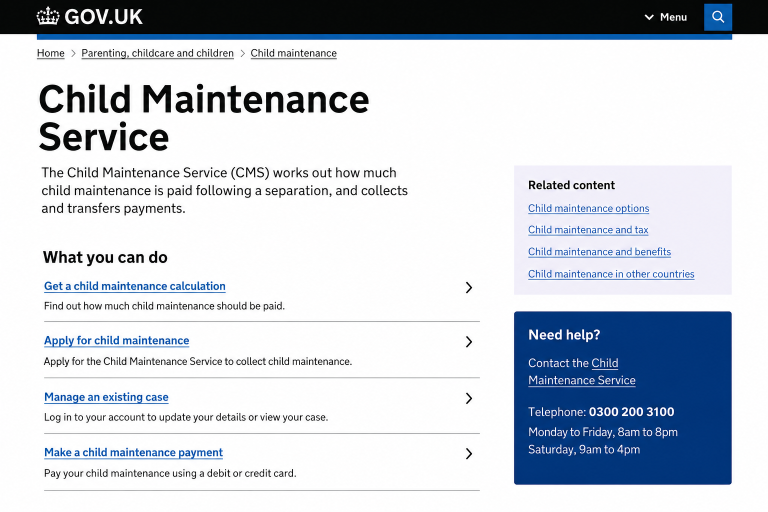
Latest official figures: by December 2025, CMS arrangements covered 1.1 million children in Great Britain.
Big recurring issues: unpaid arrears, slow enforcement, domestic abuse risks, self-employed/income loopholes, service delays, and fees on Collect & Pay.
8th June 2026
Reforming the Child Maintenance Service
3rd Report of Session 2024–26
chrome-extension://efaidnbmnnnibpcajpcglclefindmkaj/https://publications.parliament.uk/pa/ld5901/ldselect/pubserv/181/181.pdf
Short summary
Peers discussed a report called "Reforming the Child Maintenance Service", which argues that the current system is failing too many children and parents. Common concerns raised include:
- Non-paying parents avoiding maintenance.
- Delays and administrative errors.
- The system being used as a tool for post-separation abuse and coercive control.
- Difficulties in enforcing payments.
What changes are being proposed?
The Government has indicated it is working on reforms including:
✅ Ending "Direct Pay" arrangements
- Currently many parents pay each other directly, which can hide missed payments.
- The Government is looking to move more cases to CMS-managed collection to improve compliance and reduce abuse.
✅ Stronger enforcement powers
- CMS would be able to pursue arrears more quickly.
- Administrative liability orders could reduce the need to go through courts before enforcement action.
✅ Review of the maintenance calculation formula
- The way payments are calculated is under review, including concerns that some parents can manipulate income figures.
✅ More protection for domestic abuse survivors
- A major theme was preventing CMS from being used as a means of continuing control or harassment after separation.
What changes today for parents?
Nothing changes immediately today. The debate was about recommendations and pressure on ministers rather than passing a new law. The reforms still need Government action and, in some cases, legislation before they take effect.
If you're interested because you're paying or receiving CMS, I can also give a practical breakdown of what the proposed reforms could mean for real cases in 2026–2027.
Child Maintenance Service (CMS) — last 10 years (2016–2026)
Most coverage focuses on receiving parents, but a major part of public news has also been about paying parents (often called the non-resident parent / NRP) who say CMS calculations, enforcement, and investigations were unfair or wrong.
Common problems for Paying Parents
1. Wrong income calculations
Many paying parents reported CMS using:
- outdated HMRC income
- old tax-year earnings
- one-off bonuses counted permanently
- redundancy payments treated unfairly
- overtime/commission distortions
- business income misunderstood
This often caused disputes over “gross weekly income.”
Many argued:
“CMS uses historic income, not real current income”
especially after job loss or reduced hours.
This became a major Parliament issue.
2. Self-employed parents treated inconsistently
Two opposite complaints happened:
receiving parents said:
“self-employed parents hide income”
while
paying parents said:
“CMS doesn’t understand legitimate business structure”
especially involving:
- limited companies
- retained profits
- directors’ loans
- dividends
- business reinvestment
- seasonal income
This became one of the biggest CMS controversies.
3. Enforcement before disputes resolved
Many paying parents complained about:
- deductions from earnings orders
- deduction from bank accounts
- liability orders
- passport/driving licence threats
- court action
before appeals or mandatory reconsiderations were fully resolved.
They argued:
“Enforcement happens before fairness”
This appears often in MP casework.
4. Paternity disputes handled badly
One of the biggest Ombudsman cases involved a father wrongly paying:
£8,580.39
because CMS failed to properly open a paternity dispute for years.
The Parliamentary and Health Service Ombudsman ordered repayment.
This became a major national example of CMS maladministration.
5. Arrears built during CMS delays
Some paying parents said arrears were created not because they refused to pay—
but because:
- reassessments were delayed
- income updates were ignored
- CMS processing took months
- incorrect liability remained active
Then large arrears appeared suddenly.
This was heavily criticised.
6. Direct Pay accusations
Some paying parents argued Direct Pay complaints were sometimes wrongly escalated into enforcement when payment records were disputed or informal arrangements existed.
Proof problems created major disputes.
7. Redundancy + lump sum disputes
Recent Parliament debates included concerns about:
- redundancy settlements
- severance payments
- compensation payments
and whether these should count for child maintenance calculations.
This remains a live 2026 issue.
Public news timeline including Paying Parents
2018–2019
Hidden income investigations
Huge media focus on “wealthy parents avoiding maintenance.”
But paying parents also argued CMS unfairly assumed hidden income without properly understanding business accounts.
This created strong conflict.
2020
Court challenges + unfair arrears complaints
Some parents challenged DWP saying CMS pursued historic arrears unfairly and failed to correct incorrect assessments quickly enough.
Many media reports focused on:
“sudden large arrears demands”
after years of CMS delay.
2021–2022
NAO + PAC scrutiny
The Audit Office","United Kingdom"] and Committee of Public Accounts enforcement design.
2023
Domestic abuse reform + Direct Pay criticism
While reforms protected abuse survivors, some paying parents argued automatic movement to Collect & Pay could create unfair assumptions before facts were properly reviewed.
This became controversial.
2024
Faster enforcement powers caused mixed reaction
Government introduced administrative liability orders.
Receiving parents welcomed faster recovery.
Some paying parents feared:
faster mistakes happening faster
especially where calculations were already disputed.
This became major public debate.
2025
Direct Pay abolition
Government announced plans to remove Direct Pay completely.
Some campaigners supported this strongly.
Many paying parents warned:
- less flexibility
- more CMS fees
- more administrative error
- greater enforcement risk
without fixing core CMS problems first.
This became one of the most controversial reforms.
What paying parents often say
Common themes:
“I’m not refusing to pay—
I’m disputing the wrong amount”
and
“CMS treats challenge as avoidance”
This distinction is central to many CMS disputes.
Simple summary
Public CMS news is often presented as:
“paying parents refusing to pay”
But many cases are actually disputes about:
- wrong calculations
- delayed reassessments
- business income complexity
- paternity disputes
- unfair arrears creation
- enforcement before correction
That is why both receiving parents and paying parents often say:
CMS is not working properly
—just for different reasons.
Major Parliamentary Debate – March 2026
https://hansard.parliament.uk/Commons/2026-03-17/debates/8F01DC05-FAF7-40AC-8492-E5989751EC10/ChildMaintenanceService?utm_source=chatgpt.com
MPs described CMS as:
- “fundamentally broken”
- allowing financial abuse after separation
- failing domestic abuse survivors
- poor at enforcement
- inconsistent in decision-making
- weak on hidden income investigations
One MP stated:
“The system is fundamentally broken.”
The Minister accepted that improvements are needed and confirmed plans to remove Direct Pay and improve safeguards