Latest Information
REEMA Flats
The FOI Team
Reference: FOI-859110597
Date of request: 20/07/2026
Title of request: Information Regarding the REEMA Flats Regeneration Programme – West Bletchley
Information request:
I am writing as a resident/former resident of the REEMA flats in West Bletchley to request clarification on the council's plans for the remaining occupied blocks and the demolition programme.
Many residents remain concerned about the lack of clear communication regarding the timetable for relocation and demolition. I would therefore appreciate answers to the following questions.
1. Relocation of Remaining Residents
How many households are still living in the REEMA blocks?
When will every remaining resident be moved into alternative accommodation?
Is there a target date for all residents to be relocated into safer and permanent homes?
What support is being provided to those who have not yet been rehoused?
2. Delays
Has the rehousing programme experienced any delays?
If so, what are the reasons for those delays?
Have any delays affected the planned demolition timetable?
3. Demolition Programme
When is demolition expected to begin?
Which block(s) will be demolished first?
What is the expected completion date for demolition of all REEMA blocks?
4. Road Closures and Public Safety
Please confirm:
Which roads will need to be closed during demolition?
How long are any road closures expected to remain in place?
What measures will be taken to minimise disruption to residents, schools, pedestrians and local businesses?
How will dust, noise and vibration be controlled during demolition?
5. Asbestos Removal
Licensed asbestos removal is now taking place across the estate.
Could the Council please confirm:
Whether all asbestos removal will be completed before demolition begins.
Whether independent air monitoring will be undertaken during asbestos removal and demolition.
Whether the results of any air monitoring will be made publicly available.
6. Communication with Residents
Many residents feel they have not received enough information about the programme.
Could the Council advise:
How often updates will be issued?
Whether further public meetings are planned?
Where residents can access the latest demolition timetable and project updates?
Given the level of concern within the community, I would appreciate a detailed written response to each of the questions above.
If you can not answer any or some of the questions please give reasons why.
Thank you for your time, and I look forward to your reply.
Yours faithfully,
Daniel Matthews
Right First Time Uk
FOI Response 09:43 13/8/2026
Dear Daniel Matthews ,
Freedom of Information Act 2000
Your request for information has now been considered and the information requested is below
Many residents remain concerned about the lack of clear communication regarding the timetable for relocation and demolition. I would therefore appreciate answers to the following questions.
1. Relocation of Remaining Residents
How many households are still living in the REEMA blocks?
Remaining households 75.
When will every remaining resident be moved into alternative accommodation?
By 2029.
Is there a target date for all residents to be relocated into safer and permanent homes?
By 2029.
What support is being provided to those who have not yet been rehoused?
Ahead of moving, MKCC provides:
Dedicated rehousing support and case management.
Assistance in identifying suitable alternative accommodation.
Regular communication and engagement regarding rehousing options and timescales.
Support with the practical aspects of moving when suitable accommodation becomes available.
2. Delays
Has the rehousing programme experienced any delays?
No
If so, what are the reasons for those delays?
Have any delays affected the planned demolition timetable?
No
3. Demolition Programme
When is demolition expected to begin?
Structural demolition of Phase 1 properties commenced at the end of July 26.
Which block(s) will be demolished first?
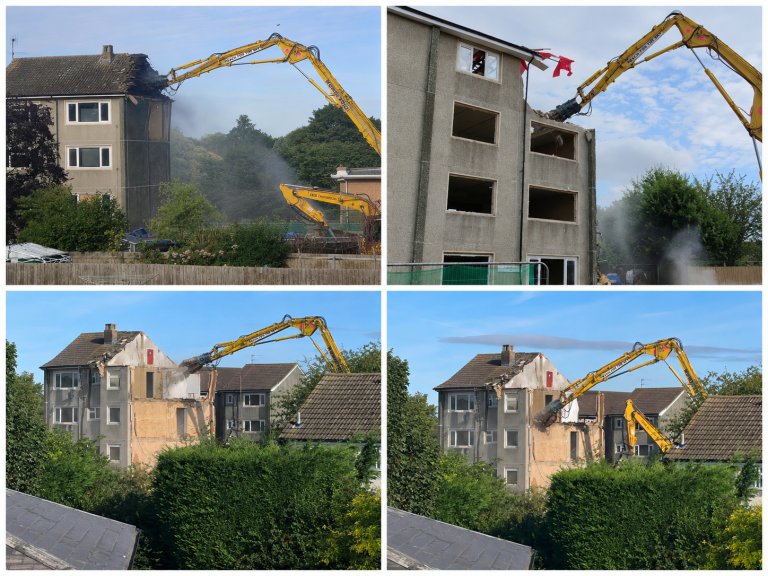
Argyll House and Stirling House have now been demolished.
What is the expected completion date for demolition of all REEMA blocks?
Phase 1 properties and the 3 properties from Phase 2 – all demolition is anticipated to be completed by November 2026. The remainder are to be procured and planned.
4. Road Closures and Public Safety
Please confirm:
Which roads will need to be closed during demolition?
None
How long are any road closures expected to remain in place?
See above
What measures will be taken to minimise disruption to residents, schools, pedestrians and local businesses?
Demolition contractor works set working hours, with no traffic movements between 8am and 9:15am Monday to Friday.
How will dust, noise and vibration be controlled during demolition?
Measures are detailed in the method statements.
5. Asbestos Removal
Licensed asbestos removal is now taking place across the estate.
The asbestos removal works are categorised as non-licenced.
Could the Council please confirm:
Whether all asbestos removal will be completed before demolition begins.
Yes
Whether independent air monitoring will be undertaken during asbestos removal and demolition.
Air monitoring will take place during the structural demolition phase.
Whether the results of any air monitoring will be made publicly available?
For demolition only
6. Communication with Residents
Many residents feel they have not received enough information about the programme.
Could the Council advise:
How often updates will be issued?
A letter was provided at the start of the programme and each resident has been updated accordingly as we progress through the phases. Tenants can get in touch with their resident engagement officer to ask any questions directly related to their tenancy / lease.
Whether further public meetings are planned?
None Planned
Where residents can access the latest demolition timetable and project updates?
The planned order of demolition is Argyll, Stirling & Sawley. Moving on to Edinburgh, Waltham & Lanark. Lewes House will be demolished last. Approx 4-6 week programme for enabling works and then structural demolition for each block. Letter drops to REEMA residents directly at key stages. Full contact details of Site Managers will be available at each site, alongside emergency contact numbers directly for REEMA residents
If you have a complaint about the handling of your request then you may request an internal review within the next 40 working days which will be considered as part of Stage 2 of the Council’s complaints procedure. Please submit your request to FOIA@milton-keynes.gov.uk, quoting your FOI reference.
You also have a right of appeal to the Information Commissioner at:
Information Commissioner's Office
Wycliffe House
Water Lane
Wilmslow
Cheshire
SK9 5AF
Tel: 0303 123 1113
Best Regards
Freedom of Information Team
Comprehensive Report
REEMA Flats, West Bletchley, Milton Keynes
What are the REEMA blocks?
The REEMA blocks are a group of 18 low-rise apartment blocks (180 flats) built in the 1960s using the REEMA Hollow Panel construction system. This prefabricated reinforced-concrete method was widely used across Britain after WWII to build homes quickly.
Why are they being demolished?
Although the buildings have been assessed as safe to live in, the concrete construction deteriorates with age. Experts found that:
- Weathering causes the concrete surface to break down.
- Pieces of concrete can become loose.
- The long-term repair costs are becoming unsustainable.
- Fencing and scaffolding have been installed around some blocks to protect residents while they remain occupied.
Timeline
- Late 2023: Milton Keynes City Council announced all residents would eventually be rehoused.
- 2024–2028: Residents are being moved in three phases.
- End of 2028: All blocks are expected to be vacant.
- Afterwards: Demolition and redevelopment.
Latest progress
As of July 2025:
- 46 households had already been rehoused.
- The first four blocks—Argyll House, Stirling House, Edinburgh House and Sawley House—are empty.
- The council has begun looking for a demolition contractor while continuing to rehouse remaining tenants.
What will replace them?
Current planning documents state the land should be redeveloped for new affordable housing. The West Bletchley Neighbourhood Plan strongly supports replacing the blocks with:
- predominantly social rented homes
- some shared ownership properties where necessary to help fund the scheme
- homes prioritised for people with local connections.
Why are they called REEMA?
REEMA was a British company that developed a prefabricated concrete building system after World War II. Thousands of homes, schools and public buildings were constructed using this method throughout the UK. Many councils are now replacing these buildings because of age-related deterioration rather than any immediate structural danger.
Local impact
The programme affects one of the largest concentrations of this construction type in Milton Keynes. The council says each household is assigned a dedicated officer to help them find a suitable replacement home, with particular attention given to accessibility and family needs.
https://www.milton-keynes.gov.uk/news/2025/new-homes-reema-block-tenants-city-council-prepares-next-phase?utm_source=chatgpt.com
Structural Condition, Asbestos, Health Impacts and Legal Duties
Prepared from:
- Michael Dyson Associates Structural Surveys (July & October 2013)
- Current demolition programme
- UK asbestos legislation
- HSE guidance
1. Introduction
The REEMA Hollow Panel flats in West Bletchley were built during the late 1940s and early 1950s using
prefabricated reinforced concrete (PRC). Around 14 blocks containing approximately 180 flats formed one of the largest remaining REEMA estates in England.
The buildings were originally designed to solve Britain's post-war housing shortage but were never intended to last indefinitely. Their construction method is now recognised as defective under the Housing Act
because of known long-term deterioration of the reinforced concrete structure. The 2013 engineering
surveys assessed whether the buildings remained structurally sound and whether refurbishment was a
viable option.
2. Structural Problems Identified
The engineers found the buildings were not in immediate danger of collapse, but deterioration had clearly begun.
The principal defects included:
Carbonation
Carbon dioxide from the atmosphere had penetrated the concrete.
This reduces the natural alkalinity protecting embedded steel reinforcement.
Once carbonation reaches the steel:
- corrosion begins
- steel expands
- concrete cracks
- concrete breaks away (spalling)
- structural strength reduces.
Several panels had already carbonated to reinforcement depth by 2013.
Chloride contamination
Perhaps the most significant finding.
Large numbers of concrete samples contained elevated chloride.
The engineers concluded calcium chloride had probably been added randomly during manufacture.
This means corrosion can begin internally even where external concrete appears undamaged.
The reports describe this as a significant long-term corrosion risk.
Corroding reinforcement
Most reinforcement remained in reasonable condition.
However severe corrosion was already found in:
- Stirling House
- Edinburgh House
- Lewes House
with measurable loss of steel section.
This demonstrates corrosion was already active in parts of the estate.
Concrete deterioration
Observed defects included:
- cracking
- spalling
- rust staining
- deteriorated entrance canopies
- cracked corner columns
- damaged window surrounds
- previous concrete repairs
These are classic signs of reinforcement corrosion.
Fire safety
Roof spaces contained openings cut through compartment walls.
These reduced fire separation between flats.
The engineers recommended fire doors or permanent closure of these openings.
Thermal performance
Walls were extremely poorly insulated.
The measured wall U-value was approximately 2.23 W/m²K, many times worse than modern building standards.
Consequences include:
- higher heating costs
- colder internal wall surfaces
- increased condensation
- greater risk of mould growth.
3. What the engineers recommended
Importantly, the engineers did not recommend demolition in 2013.
Instead they recommended:
- repair damaged concrete
- repair spalling
- structural restraint ties
- corner straps
- external wall insulation (over cladding)
- weatherproofing
- improved fire stopping
They concluded these works could provide at least another 30 years of service life if properly maintained.
4. Asbestos
Was asbestos likely?
Yes.
Buildings of this period commonly contain asbestos-containing materials (ACMs).
The structural surveys specifically excluded asbestos from their scope and recommended a separate asbestos survey before any construction work.
Typical locations
Likely materials include:
- pipe lagging
- heating insulation
- asbestos insulating board (AIB)
- floor tiles
- bitumen adhesives
- textured coatings
- ceiling panels
- service risers
- soffits
- roof products
Finding asbestos during demolition preparation is entirely expected for buildings from this era.
5. Health effects of asbestos
Asbestos is not generally dangerous simply because it is present.
The main hazard occurs when asbestos-containing materials are damaged and fibres become airborne.
Once inhaled, fibres can remain in the lungs permanently.
Diseases include:
Mesothelioma
An aggressive cancer affecting the lining of the lungs.
Almost exclusively linked to asbestos exposure.
Usually develops 20–60 years after exposure.
Lung cancer
Risk increases significantly with asbestos exposure.
Smoking dramatically increases this risk.
Asbestosis
Permanent scarring of lung tissue.
Causes:
- breathlessness
- chronic cough
- reduced lung function.
Pleural disease
Asbestos can also cause:
- pleural plaques
- diffuse pleural thickening
- pleural effusions.
6. Could tenants have been exposed?
That depends on the condition of the asbestos.
If asbestos remained:
- sealed
- painted
- enclosed
- undamaged
then exposure risk is generally considered low.
Potential exposure increases if materials were:
- drilled
- cut
- broken
- deteriorating
- disturbed during repairs.
Without an asbestos survey it is impossible to conclude whether tenants were exposed.
The fact that licensed contractors are now carrying out asbestos removal does not itself prove residents were exposed. It shows asbestos has been identified and is being managed before demolition.
7. Legal duties of landlords
The main legislation includes:
Control of Asbestos Regulations 2012
These regulations require those responsible for non-domestic premises—and the common parts of domestic buildings such as stairwells, service ducts, boiler rooms and communal areas—to:
- identify asbestos where present
- assess its condition
- maintain an asbestos management plan
- prevent unnecessary disturbance
- provide information to anyone liable to disturb it (such as contractors).
The regulations do not generally require landlords to proactively tell every tenant where asbestos is located inside their flat if it is safely managed and undisturbed.
Housing Act 2004
Landlords must ensure homes are free from serious hazards.
If deteriorating asbestos created a significant health risk, the local authority could require action under the Housing Health and Safety Rating System (HHSRS).
Landlord and Tenant Act 1985
Landlords must maintain the structure and exterior of rented properties and keep key installations in repair.
Health and Safety at Work etc. Act 1974
Applies to employees, contractors and anyone undertaking maintenance work where asbestos may be present.
8. Should tenants have been informed?
This depends on the circumstances.
If asbestos was:
- safely managed,
- in good condition,
- and unlikely to be disturbed,
there is generally no legal requirement to notify every tenant simply because asbestos exists.
However, landlords should provide relevant information where:
- planned works could disturb asbestos,
- contractors require the information,
- or there is a material risk arising from the asbestos.
If asbestos became damaged or posed a risk to occupants, the landlord would be expected to take appropriate action and communicate as necessary.
9. Current asbestos removal
The recent photograph showing a contractor's sign stating "Asbestos removal in progress" indicates licensed removal work is underway before demolition.
This is consistent with normal UK demolition practice.
Typical sequence:
- Buildings emptied.
- Utilities disconnected.
- Hazardous materials removed.
- Asbestos removed under controlled conditions.
- Demolition begins.
10. Overall assessment
The evidence paints a picture of buildings that, in 2013, were ageing but still structurally serviceable if substantial investment was made. The engineers identified active concrete deterioration, chloride
contamination, and isolated reinforcement corrosion, but concluded that repair and over cladding could potentially extend the buildings' life by around 30 years.
Separately, the presence of asbestos in buildings of this age is unsurprising. Current licensed asbestos removal work before demolition reflects standard legal practice and does not, on its own, demonstrate that residents experienced unsafe exposure while living there.
But shown movement and deuteration dose grater that risk of exposure.
No works was done that was recommended in the 2013 report.
Milton Keynes council continued to move people in to the flats even though of the risks.
Risks to Residents;
1. Asbestos exposure
The greatest health concern is asbestos.
If asbestos-containing materials remained:
- sealed,
- painted,
- enclosed,
- and undisturbed,
the risk to residents would generally have been very low.
However, risk could have increased if:
- ceilings or walls containing asbestos were drilled or damaged,
- pipe lagging deteriorated,
- refurbishment work disturbed asbestos,
- water leaks caused asbestos insulating boards to break down,
- DIY work released fibres.
Diseases linked to significant asbestos exposure include:
- Mesothelioma (a cancer of the lining of the lungs)
- Lung cancer
- Asbestosis (scarring of the lungs)
- Pleural thickening and pleural plaques
These diseases usually develop 20–60 years after exposure and are more commonly associated with occupational exposure (builders, plumbers, electricians, shipyard workers), although environmental exposure can occur in some circumstances.
2. Damp and mould
The 2013 surveys found the buildings had poor thermal performance, making condensation more likely. Combined with ageing construction, this can contribute to damp and mould if ventilation is inadequate.
Possible health effects include:
- worsening asthma
- coughing and wheezing
- sinus problems
- chest infections
- allergic reactions
- irritation of the eyes and throat
Young children, older adults, and people with respiratory conditions are most vulnerable.
3. Cold homes
The walls were poorly insulated, meaning homes were harder and more expensive to heat.
Living in cold housing is associated with:
- higher rates of respiratory illness
- increased cardiovascular strain
- poorer mental wellbeing
- increased risk of falls in older adults due to reduced mobility
These effects arise from the indoor environment rather than the concrete structure itself.
4. Concrete deterioration
The structural deterioration identified in 2013—cracking, spalling and reinforcement corrosion—was primarily a safety and durability issue, not a direct health hazard.
Potential indirect risks included:
- falling pieces of concrete if deterioration became severe
- trip hazards from damaged concrete
- dust generated during repairs
This is one reason fencing and protective measures were later installed around some blocks.
5. Mental health impacts
Living in buildings awaiting demolition or major repair can also affect wellbeing.
Research has shown that prolonged uncertainty, deteriorating surroundings, and concerns about relocation can contribute to:
- stress
- anxiety
- depression
- sleep disturbance
- reduced quality of life
These impacts vary between individuals but are recognised in public health research.
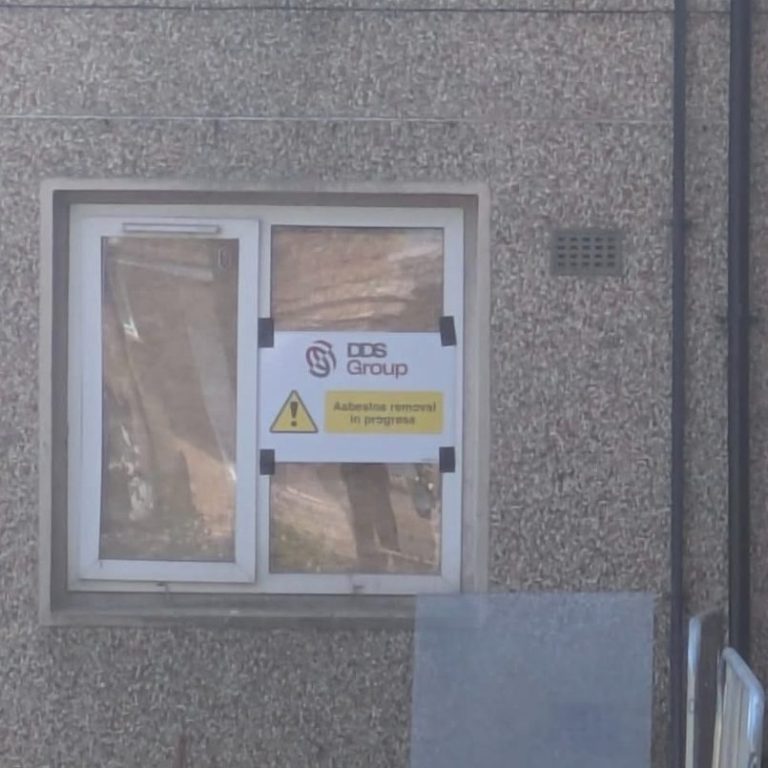
Photo taken July 2026
Where are the REEMA blocks?
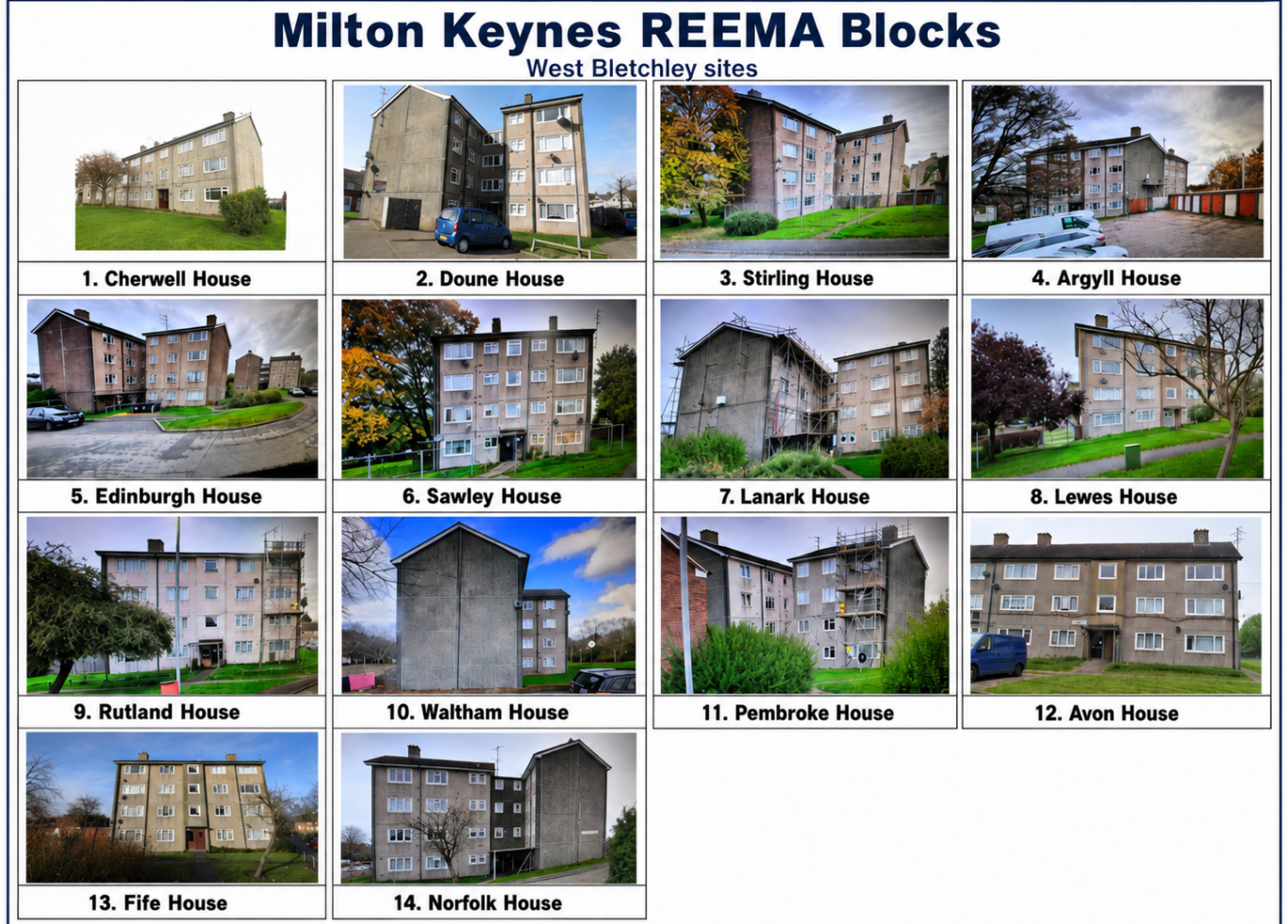
The 15 REEMA blocks are spread across the West Bletchley estate rather than being on one site. The West Bletchley Neighbourhood Plan identifies each location as part of the redevelopment programme.
Buckingham Road area
- Edinburgh House (MK3 5JQ)
- Lewes House (MK3 5JH)
Westminster Drive area
- Sawley House (MK3 6LQ)
Whaddon Way area
- Waltham House (MK3 6NS)
Chester Close
- Stirling House (MK3 5JZ)
Essex Close
- Norfolk House (MK3 7ES)
Suffolk Close
- Argyll House (MK3 7EW)
Cornwall Grove
- Fife House (MK3 7HY)
Cumbria Close
- Lanark House (MK3 7EL)
Somerset Close
- Pembroke House (MK3 7HP)
Middlesex Drive
- Rutland House (MK3 7EZ)
Avon Grove
- Avon House (three linked REEMA blocks)
Derwent Drive
- Cherwell House (three linked REEMA blocks) (MK3 7BJ)
Torre Close
- Doune House
Despite the risks said in 2023 and said to be demolished Milton Keynes council continued to use the flats for temporary housing.
FREEDOM INFORMATION REQUEST
Reference: FOI-737419590
Date of request: 04/08/2025
Title of request: Housing - Reema block
Information request:
I'd like to no how many people was placed for housing in a Reema block in Milton Keynes on a long or temporary basis and to specify numbers of …
Temporary
Long secured tenancy
2014
2015
2016
2017
2018
2019
2020
2021
2022
2023
2024
2025
Daniel Matthews
Response
Dear Daniel Matthews ,
Freedom of Information Act 2000
Your request for information has now been considered and the information requested is below.
FOI- 737419590
Description: Housing - Reema block
how many people was placed for housing in a Reema block in Milton Keynes on a long or temporary basis and to specify numbers of …
Temporary
Long secured tenancy
Responses
1
2014 Secure- 23
Temporary- 1
2
2015 Secure- 23
Temporary- 2
3
2016 Secure- 16
Temporary- 0
4
2017 Secure- 9
Temporary- 4
5
2018 Secure- 11
Temporary- 6
6
2019 Secure- 11
Temporary- 5
7
2020 Secure- 11
Temporary- 4
8
2021 Secure- 16
Temporary- 4
9
2022 Secure- 15
Temporary- 1
10
2023 Secure- 4
Temporary- 9
11
2024 Secure- 0
Temporary - 13
12
2025 Secure- 0
Temporary- 16
If you have a complaint about the handling of your request then you may request an internal review within the next 40 working days which will be considered as part of Stage 2 of the Council’s complaints procedure.
You also have a right of appeal to the Information Commissioner at:
Information Commissioner's Office
Wycliffe House
Water Lane
Wilmslow
Cheshire
SK9 5AF
Tel: 0303 123 1113
Best Regards
Freedom of Information Team
Cherwell House Derwent Drive 2022 - 2023
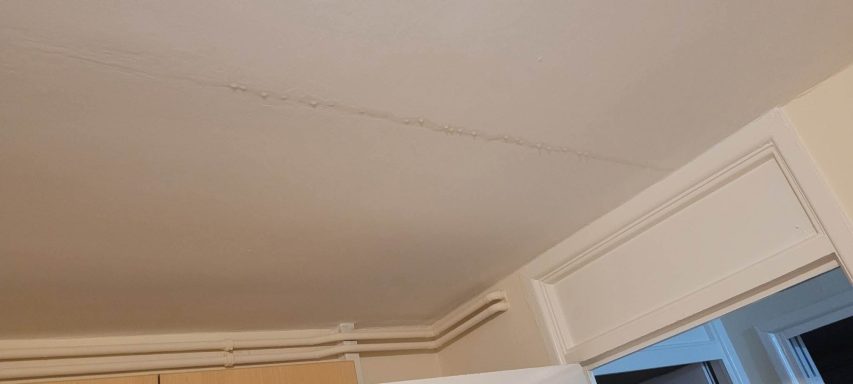
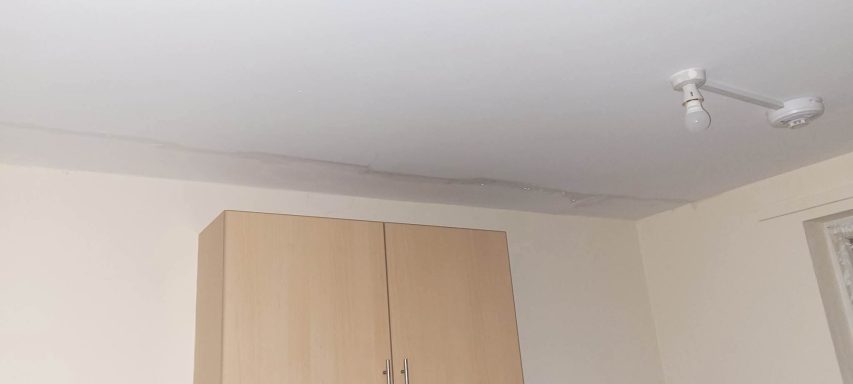
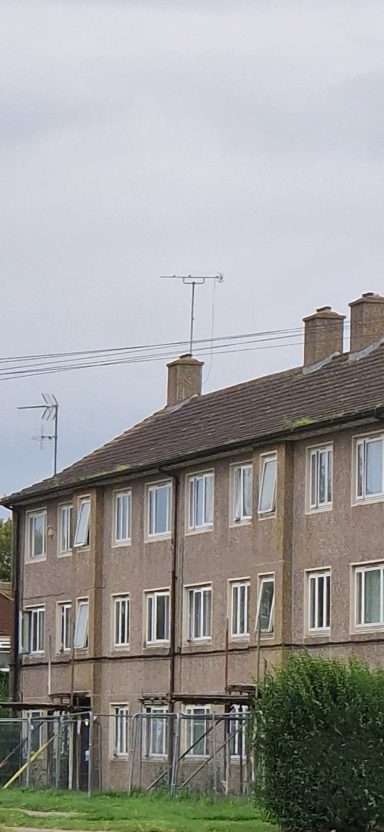
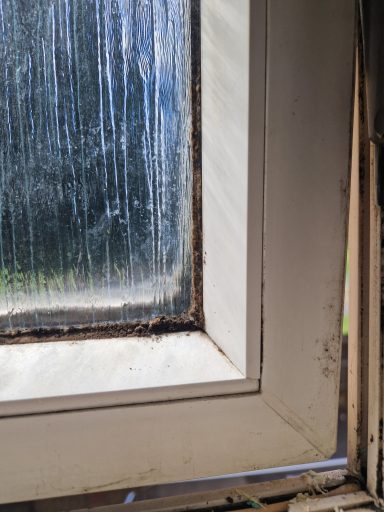
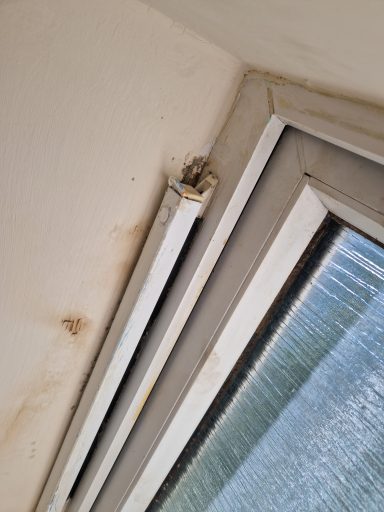
Neglected for so long grass was growing in the gutters.
Seals on the windows was warn letting cold threw and the damp caused mould to grow quickly.
Damp and mould on ceiling and around vent
ceiling
contained asbestos