
Domestic Abuse & Trauma Support
Understanding Abuse, Emotional Trauma & Safe Support
Domestic abuse and trauma can affect anyone regardless of age, gender, background, relationship status, sexuality, culture, or financial circumstances. Abuse is never acceptable, and no person or child should feel unsafe, controlled, frightened, threatened, or isolated within a relationship or home environment.
Domestic abuse is not always physical. Emotional harm, coercive control, intimidation, financial abuse, manipulation, threats, and psychological abuse can also have serious and lasting effects on emotional wellbeing and mental health.
Right First Time UK aims to provide balanced, supportive, and non-judgemental information to help individuals and families better understand domestic abuse, emotional trauma, safety, recovery, and where to access support.
This page provides general guidance and signposting only and is not legal, safeguarding, or medical advice.
Understanding Domestic Abuse
Domestic abuse can happen in:
- Married relationships
- Partner relationships
- Former relationships
- Family relationships
- Shared households
Abuse may involve:
- Physical violence
- Emotional abuse
- Coercive or controlling behaviour
- Threats or intimidation
- Financial abuse
- Isolation from support networks
- Harassment or stalking
- Digital or online abuse
- Sexual abuse
- Verbal abuse or humiliation
Abuse can develop gradually over time and may become increasingly controlling or harmful.
Emotional Abuse & Coercive Control
Not all abuse leaves visible injuries. Emotional abuse and coercive control can seriously affect emotional wellbeing, confidence, independence, and feelings of safety.
Examples may include:
- Constant criticism or humiliation
- Monitoring communication or movements
- Threatening behaviour
- Isolation from friends or family
- Manipulation or intimidation
- Financial control
- Blaming or gaslighting
- Creating fear or dependency
People experiencing emotional abuse may feel:
- Trapped
- Confused
- Anxious
- Isolated
- Emotionally exhausted
- Fearful of speaking out
Emotional abuse should always be taken seriously.
The Emotional Impact of Abuse & Trauma
Trauma affects people differently. Domestic abuse or long-term emotional stress may contribute to:
- Anxiety
- Depression
- Panic or overwhelm
- Sleep difficulties
- Emotional exhaustion
- Low confidence
- Isolation
- Hypervigilance or fear
- Difficulty trusting others
- Emotional numbness
- Post-traumatic stress symptoms
People may continue experiencing emotional effects long after abusive situations have ended.
Recovery takes time, safety, and support.
Children & Domestic Abuse
Children can also be deeply affected by domestic abuse or high-conflict environments, even if abuse is not directed toward them directly.
Children may experience:
- Anxiety or fear
- Emotional distress
- Behavioural changes
- Sleep difficulties
- School problems
- Emotional insecurity
- Trauma responses
- Withdrawal or anger
Children benefit from:
- Safe environments
- Emotional reassurance
- Stable routines
- Calm communication
- Trusted adults who listen
- Early emotional support
Children should never be used within adult conflict or exposed to abusive behaviour.
Recognising Warning Signs
Possible signs someone may be experiencing abuse include:
- Fearfulness around a partner or family member
- Withdrawal from friends or family
- Sudden changes in behaviour
- Low confidence or anxiety
- Isolation
- Financial dependence
- Frequent emotional distress
- Unexplained injuries
- Fear of speaking openly
- Changes in communication or social activity
Some people may hide abuse due to fear, shame, emotional pressure, financial concerns, or worries about not being believed.
Supporting Someone Experiencing Abuse
If someone may be experiencing abuse:
- Listen calmly without judgement
- Take concerns seriously
- Avoid blaming or pressuring them
- Respect their safety and choices
- Encourage access to specialist support
- Help them identify safe support options
- Contact emergency services if immediate danger exists
People experiencing abuse often need support, patience, understanding, and safe opportunities to seek help.
Safety Planning
Where abuse or safeguarding concerns exist, safety should always remain the priority.
Safety planning may include:
- Keeping important documents accessible
- Identifying trusted support contacts
- Planning safe places to go if needed
- Keeping emergency phone numbers available
- Seeking specialist domestic abuse support
- Contacting police where immediate danger exists
People should never be pressured into unsafe situations or forced mediation where abuse or fear is present.
Trauma Recovery & Emotional Healing
Recovery after abuse or trauma often takes time and support. People may benefit from:
- Counselling or therapy
- Emotional support services
- Trauma-informed support
- Safe housing or safeguarding support
- Healthy support networks
- Rest and recovery time
- Rebuilding confidence gradually
- Reducing isolation
- Accessing mental health support where needed
Healing is not always straightforward, and setbacks do not mean failure.
Healthy Relationships
Healthy relationships should involve:
- Respect
- Safety
- Trust
- Communication
- Equality
- Emotional support
- Personal boundaries
- Freedom from fear or control
No relationship should involve intimidation, fear, abuse, or harm.
Support Services
Domestic Abuse Support
- Women’s Aid
- Refuge
- Men’s Advice Line
- ManKind Initiative
- Respect Phoneline
- Galop
Mental Health & Emotional Support
- NHS Mental Health Services
- Mind UK
- Samaritans
- Rethink Mental Illness
Family & Child Support
- NSPCC
- Childline
- Family Lives
- Relate UK
Crisis & Emergency Support
If you or someone else is in immediate danger:
Call 999 immediately.
If emotional distress or trauma becomes overwhelming:
- Contact NHS 111
- Speak to a GP
- Contact Samaritans
- Reach out to specialist support organisations
No person should feel they have to suffer abuse or trauma alone.
Our Message
Domestic abuse and emotional trauma can have serious and lasting effects on adults, children, families, emotional wellbeing, and mental health.
Support, understanding, safety, and early intervention matter. Every person deserves to feel safe, respected, listened to, and protected from harm.
Recovery is possible with the right support and safe environments.
Safety matters.
Support matters.
People matter.
What To Do During an Emotional or Mental Health Crisis
A Simple Grounding & Safety Guide
When stress, panic, anxiety, emotional overwhelm, or crisis feelings become intense, it can feel difficult to think clearly. During these moments, slowing things down and focusing on simple steps can help calm the body and mind.
You do not need to solve everything immediately. Focus first on safety, breathing, and getting through the next few moments.
Step 1 — Pause & Breathe Slowly
Try slowing your breathing down gently.
Simple Breathing Technique
Breathe in slowly:
1… 2…
Breathe out slowly:
1… 2…
Repeat slowly several times.
Do not rush.
Focus only on your breathing for the moment.
Slow breathing can help reduce panic, stress, racing thoughts, and physical tension.
Step 2 — Ground Yourself
Look around and focus on your surroundings.
Try naming:
- 5 things you can see
- 4 things you can touch
- 3 things you can hear
- 2 things you can smell
- 1 thing you can focus on
This can help bring your mind back to the present moment.
Step 3 — Move to a Safe & Calm Space
If possible:
- Sit somewhere quiet
- Step outside for fresh air
- Move away from arguments or stressful situations
- Lower noise and distractions
- Drink some water
You do not have to deal with everything at once.
Step 4 — Contact Someone You Trust
You do not need to struggle alone.
Consider contacting:
- A trusted family member
- A friend
- Your GP
- A support worker
- A mental health support line
Simply telling someone:
“I’m struggling right now”
can be an important first step.
Step 5 — Avoid Making Major Decisions in Crisis
During periods of extreme stress or emotional overwhelm:
- avoid impulsive decisions
- avoid aggressive conflict
- avoid harmful coping behaviours
- avoid isolating yourself completely
Focus first on calming, safety, and support.
Step 6 — Reach Out for Professional Support
If things continue to feel overwhelming, seek support early.
Support Services
- NHS 111
- Samaritans
- Mind UK
- GP services
- Local mental health teams
If you or someone else is in immediate danger:
Call 999 immediately.
Important Reminder
Strong emotions can pass, even when they feel overwhelming in the moment.
Stress, anxiety, panic, trauma, grief, financial pressure, family conflict, isolation, or emotional exhaustion can affect anyone.
Taking one small step at a time matters.
Breath by breath.
Moment by moment.
Support is available.
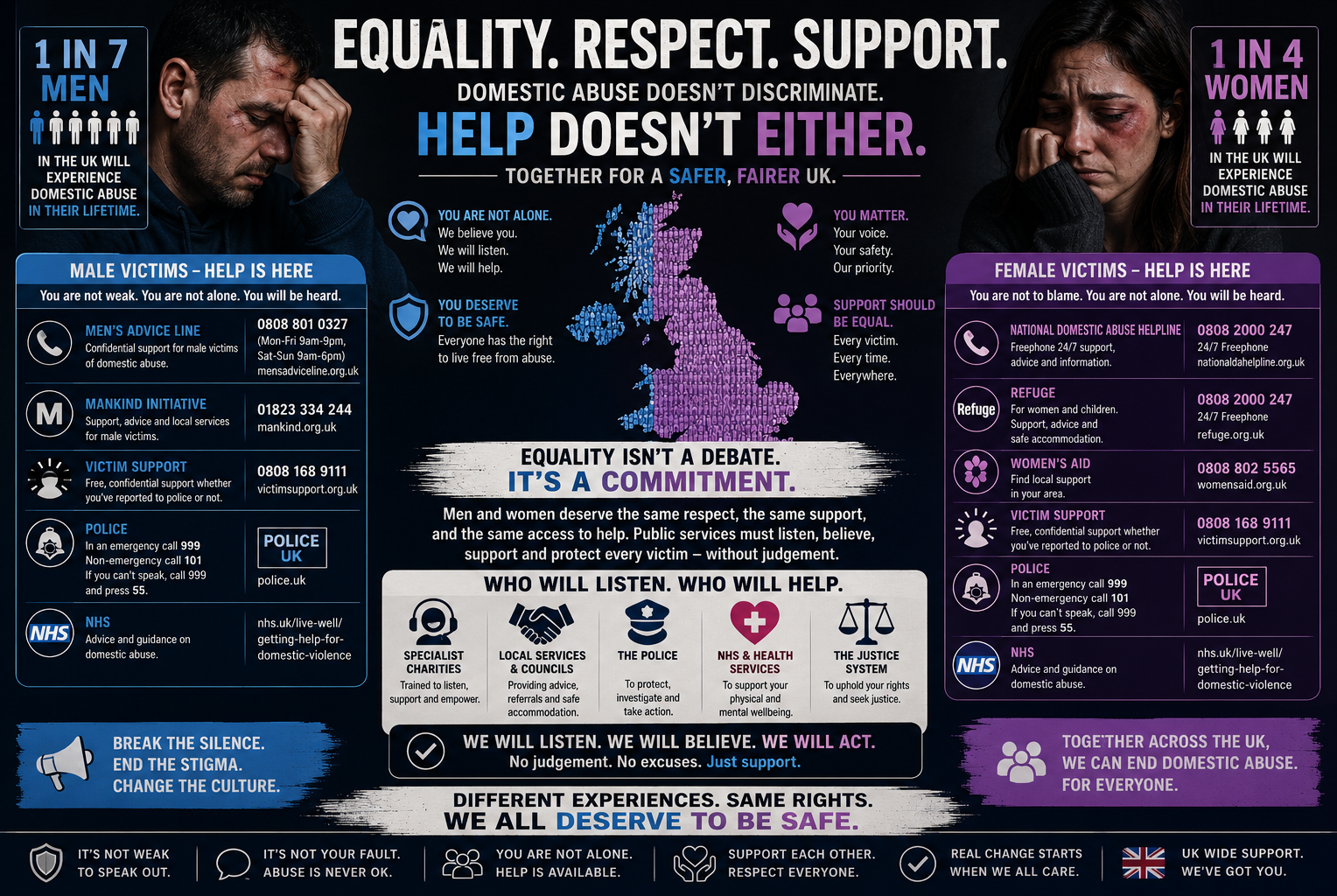
Domestic abuse support
Equality means every victim is heard.
Domestic abuse does not only happen to women. Men suffer too.
Domestic abuse affects men and women, fathers and mothers, young and old, across every background in the UK.
Support should never depend on gender.
Every victim deserves to be listened to, believed, protected, and supported by qualified and motivated professionals—without judgement.
Too often, male victims are ignored, and too often female victims are failed by delays, fear, and lack of action.
This must change.
Police, support services, charities, NHS staff, and public services must work equally for everyone—because abuse is abuse, no matter who the victim is.
Who helps?
🚓 Police – Emergency 999 / Non-emergency 101
📞 Victim Support – Confidential help for all victims
📞 Women’s Aid – Support for women and children
📞 Refuge – Safe support and emergency help
📞 Men’s Advice Line – Support for male victims
📞 ManKind Initiative – Help for male domestic abuse victims
🏥 NHS – Medical support, safeguarding, and guidance
The message is simple:
Listen. Believe. Protect. Act.
No victim should fight alone.
No victim should be dismissed.
No victim should be left unheard.
Real equality means support for everyone.
Support for Men
Phone: 0808 801 0327
Who they help:
- male victims of domestic abuse
- men in heterosexual or same-sex relationships
- family/friends supporting male victims
- practical advice + emotional support + signposting
Phone: 01823 334 244
Who they help:
- male victims of domestic abuse
- family, friends, neighbours
- employers supporting male victims
- confidential advice and local service referrals
Phone: 08 08 16 89 111
Who they help:
- all victims of crime and abuse
- emotional support
- independent practical help
- whether police are involved or not
Emergency: 999
Non-emergency: 101
Who they help:
- immediate risk
- threats
- assault
- coercive control
- stalking
- harassment
Who they help:
- medical support
- safeguarding referrals
- GP / hospital support
- mental health support
Support for Women
National Domestic Abuse Helpline (Refuge)
Phone: 0808 2000 247
Who they help:
- women experiencing domestic abuse
- 24/7 confidential support
- refuge accommodation referrals
- multilingual support
Phone: 0808 2000 247
Who they help:
- women and children
- refuge accommodation
- crisis support
- safety planning
Phone: 0808 802 5565
Who they help:
- women experiencing abuse
- local support services
- live chat + safety planning
- refuge and specialist referrals
Phone: 08 08 16 89 111
Same support for all victims.
Additional specialist support numbers
LGBT+ domestic abuse
Phone: 0800 999 5428
For:
- LGBT+ victims of abuse
- hate crime + domestic abuse support
Older victims (60+)
Phone: 0808 808 8141
For:
- older victims of abuse
- elder abuse + domestic abuse
Forced marriage
Phone: 020 7008 0151
For:
- forced marriage
- honour-based abuse
Sexual violence / rape support
Phone: 0808 500 2222
For:
- sexual violence
- rape support
- counselling referrals
Emotional crisis support
Phone: 116 123
For:
- emotional crisis
- suicide prevention
- distress support
Best advice for employers / HR
If an employee discloses abuse:
do not investigate like HR misconduct first
instead:
listen + record safely + protect + refer
because often the first safe response changes everything.